
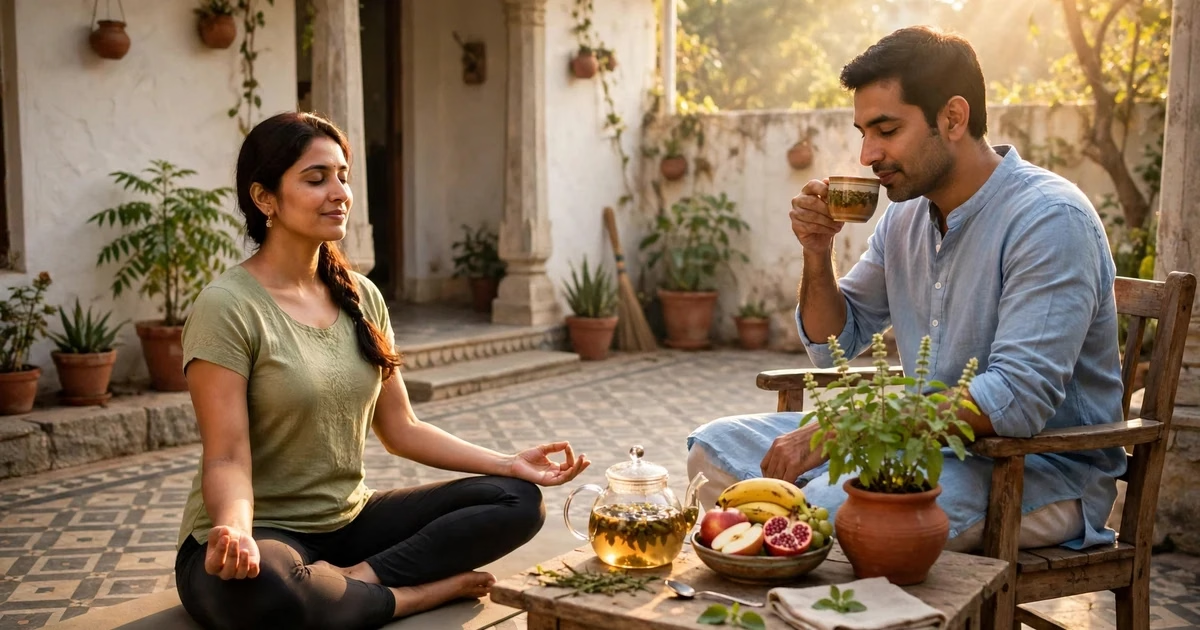
A healthy life is not just about eating well or exercising for a few weeks. It is a way of living that covers the body, the mind, and daily habits together, in a way that fits Indian life, Indian food, and Indian budgets. In a country where lifestyle diseases such as diabetes, hypertension, and obesity are rising fast, the need for practical, affordable, and culturally grounded wellness advice has never been greater.
This guide explores every dimension of a healthy life the Indian way, from Ayurvedic healing and Indian nutrition science to mental wellness and natural beauty. Everything here uses ingredients and practices that are already part of Indian homes: haldi, ghee, amla, ragi, dal-chawal, yoga, and morning sunlight. A healthy life does not need expensive products or imported superfoods. It needs small, steady habits that you can actually keep.
Please read first: This article is for general information only and is not medical advice. Herbs, home remedies, and lifestyle practices described here are traditional and general in nature, not treatments for any disease. If you are pregnant, take regular medicine, or have a medical condition, please talk to a doctor before starting any herb, supplement, or new exercise routine.
Why India Needs a Wellness Revolution Right Now
India is at a critical health crossroads. Urban Indians are working longer hours, eating more processed food, sleeping less, and moving their bodies far too little. Home-cooked food is being replaced by ordering in, walking is being replaced by sitting in traffic, and sleep is being cut short by late-night screens. The consequences show up slowly, and then all at once: rising blood sugar, rising blood pressure, back pain, poor sleep, anxiety, and weight gain that is hard to reverse.
Large health surveys in India keep pointing in the same direction. Many Indian adults do not meet recommended physical activity levels. A large share of urban professionals report chronic stress. Many people suffer from nutritional deficiencies even while eating three meals a day, because the meals are rich in calories but poor in nutrients. Non-communicable diseases, such as diabetes and heart disease, now account for a large share of deaths across the country. These are not just statistics. They represent real families dealing with illness that could often have been prevented with earlier, simpler changes.
A healthy life starts with a simple belief: prevention is far more powerful than cure. That belief aligns perfectly with the ancient Indian understanding of health, a philosophy that treated the body and mind as one interconnected system, not as separate problems. You do not need to change everything at once. You need to change one habit, keep it for a month, and then add the next one. This guide shows you where to start.
The Six Pillars of a Healthy Life
What makes a healthy life achievable is a structured approach. Instead of chasing every new health trend, focus on six pillars. Each pillar is rooted in both modern understanding and traditional Indian wisdom, a combination that no generic Western health platform can replicate for Indian conditions.
1. Ayurveda and Herbal Healing. Ayurveda is woven into everyday Indian life, from the haldi in dal to the tulsi plant in the courtyard. Herbs such as ashwagandha for stress, triphala for gut health, and giloy for immunity have been used for centuries, and they are now studied by modern researchers as well. The key is to use them with proper context and in sensible amounts, not as magic cures. Traditional home remedies built around these herbs are often the simplest way to start.
2. Nutrition Tailored to Indian Kitchens. Rather than recommending imported superfoods or expensive protein powders, a healthy life in India focuses on what is already sitting in your kitchen: haldi, ghee, amla, ragi, and dal-chawal. These foods are affordable, widely available, and suited to Indian digestion and climate. Learning to eat them well matters far more than buying anything new.
3. Fitness Without a Gym. Morning walks, Surya Namaskar, and bodyweight exercises require zero equipment and zero monthly fees, yet they are enough to keep most people fit. A healthy life does not need a gym membership. It needs regular movement that fits into a normal Indian day.
4. Mental Wellness Without Stigma. India faces a large gap between the number of people who need mental health support and the number of trained professionals available. That makes self-directed mental wellness practices, such as sleep routines, digital boundaries, and meditation, not optional but essential. Talking about stress and anxiety openly is itself a significant step forward in a country where mental illness is still widely stigmatised.
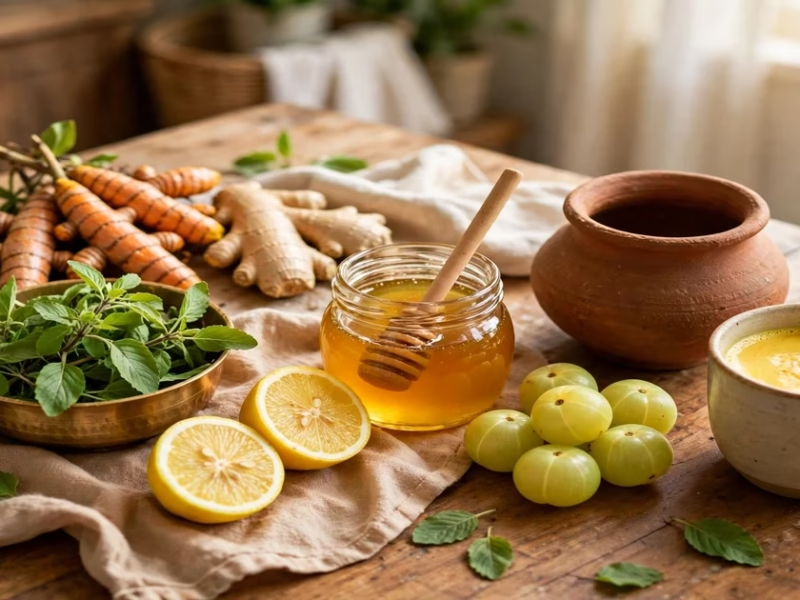
5. Natural Skin and Hair Care. India’s extreme climate, scorching summers, humid monsoons, and cold winters, demands skin and hair solutions built for Indian conditions. Kitchen-based remedies using besan, haldi, aloe vera, amla, and coconut oil have stood the test of time, and they cost almost nothing.
6. Preventive Health Practices. Regular health screenings, seasonal eating, and small lifestyle adjustments form the foundation of long-term disease prevention. A yearly blood sugar and blood pressure check, for example, can catch problems years before they become serious. Prevention is quiet, cheap, and far easier than treatment.
Ayurveda: Ancient Wisdom Backed by Modern Science
One of the most powerful aspects of a healthy life in India is how Ayurveda is moving out of the realm of superstition and into evidence-based practice. The CCRAS, the Central Council for Research in Ayurvedic Sciences, is a government body that researches Ayurvedic herbs and formulations, and many herbs that Indian grandmothers have used for centuries are now the subject of modern scientific study. That does not mean every traditional claim is proven. It means Ayurveda deserves to be taken seriously, studied carefully, and used wisely.
Here are the key Ayurvedic herbs that support a healthy life:
Ashwagandha. One of the most widely studied adaptogenic herbs, ashwagandha is traditionally used to reduce stress, combat fatigue, and support hormonal balance. It is commonly taken as a powder with warm milk at night, in small amounts, but people with thyroid conditions or those taking medicine should consult a doctor first.
Tulsi (Holy Basil). Tulsi is a natural antibacterial and immunity booster in traditional use. A cup of tulsi tea in the morning is a gentle daily habit, and the plant itself grows easily in most Indian homes. Fresh tulsi leaves can also be chewed on an empty stomach.
Triphala. Triphala is a three-fruit Ayurvedic formulation that is traditionally used to gently support digestion, improve gut health, and support liver function. It is often taken as a powder with warm water at night. It suits many people whose diets are heavy in spices and oil, but it should be used in moderation.
Giloy (Guduchi). Giloy gained mainstream attention during the COVID pandemic, but Ayurveda has recommended it for centuries as a traditional remedy for fever and low immunity. Giloy juice or tablets are widely available, but the dose should be kept small and regular, and long-term use should be discussed with a doctor.
Neem. Neem is traditionally used as a blood purifier and for skin health, and it is particularly relevant for people managing skin conditions aggravated by pollution. Neem leaves can be boiled in water for a skin wash, and neem oil is used for scalp care. People with diabetes should be careful with neem supplements and should ask their doctor first.
Shatavari. Shatavari is traditionally used to support women’s hormonal health across all life stages, from menstrual health to post-pregnancy recovery and menopause. It is usually taken as a powder with warm milk. As with all herbs, it is not a substitute for medical care, and women who are pregnant or taking hormone medicine should consult a doctor.
For ideas on how these herbs fit into daily meals, read our guide to ayurvedic dinner foods, which explains how to use ginger, turmeric, cumin, and other kitchen spices at night for better digestion and sleep.
Indian Nutrition: Busting the Myths That Are Hurting You
Most Indians are eating incorrectly, not because they are eating wrong foods, but because they have accepted myths that have no basis in good evidence. A healthy life needs honest nutrition, so here are three of the most common myths, and the reality behind each one.
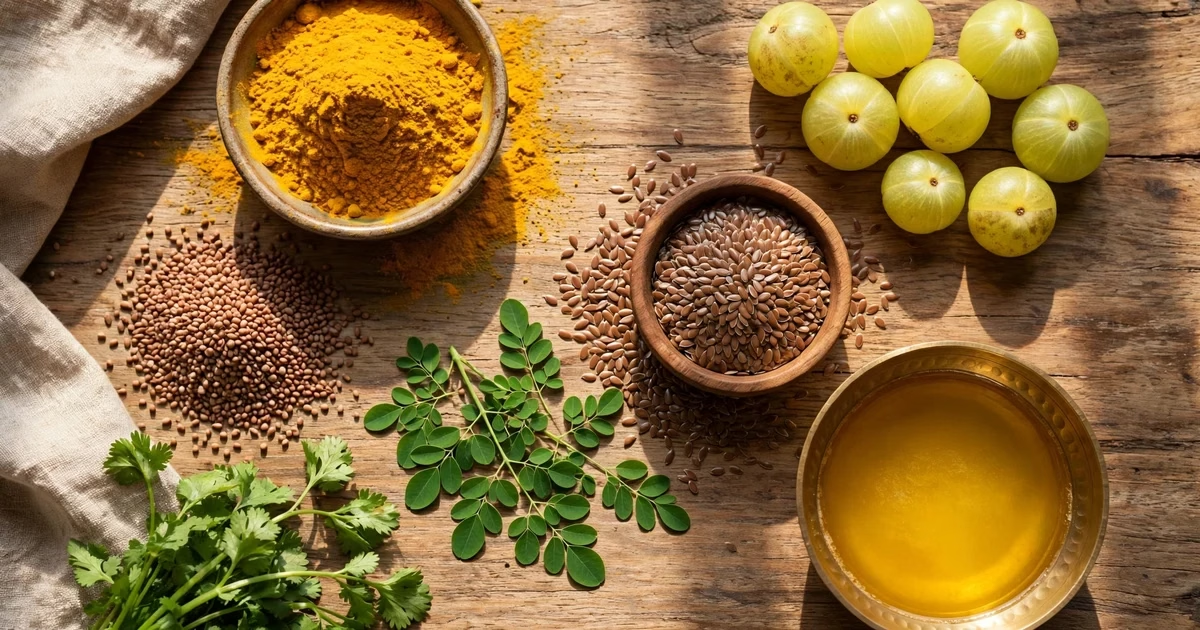
Myth: Ghee is bad for your heart. Reality: Pure desi ghee, consumed in moderation, supports the gut and aids the absorption of fat-soluble vitamins. Ghee contains butyrate, a compound that is linked to reduced inflammation in the gut. The problem is never ghee itself but the quantity and the overall lifestyle. One teaspoon on a hot roti is very different from ghee poured freely over every meal.
Myth: Rice causes diabetes. Reality: Rice eaten with dal, vegetables, and a source of fat has a much more manageable effect on blood sugar than rice eaten alone in large portions. The real culprit is usually sedentary living combined with large portion sizes, not rice itself. Eating a moderate portion, chewing slowly, and adding vegetables and dal makes rice a reasonable part of a healthy life.
Myth: Dal-chawal is not enough nutrition. Reality: Dal-chawal is a well-matched protein combination. The amino acid profile of rice complements that of lentils, so together they provide all the essential amino acids the body needs. Add a green vegetable and a spoon of curd, and dal-chawal becomes a complete, affordable, and deeply Indian meal.
Beyond myth-busting, these powerhouse Indian superfoods are affordable and widely available:
| Superfood | Key Benefit | Best Way to Use |
|---|---|---|
| Haldi (Turmeric) | Anti-inflammatory, immunity | Haldi doodh, daily cooking |
| Amla | Rich in natural Vitamin C | Raw, juice, or murabba |
| Moringa (Sahjan) | Iron, calcium, protein | Dal powder, sabzi |
| Ragi | Calcium, blood sugar control | Roti, dosa, porridge |
| Flaxseeds | Omega-3 fatty acids | Ground into roti atta |
| Ghee | Brain health, gut repair | Cooking, on hot roti |
Two of these deserve special attention. Jaggery, or gur, is a traditional Indian sweetener that keeps some iron and minerals that white sugar loses, and it is a better choice for sweetening tea or desserts in small amounts. And buffalo milk, which is rich and creamy, is a good source of calcium and protein, but it is heavier than cow milk, so a small glass is enough, especially at night.
Fitness for Every Indian, No Gym Required
The reality of Indian life is that most people cannot afford gym memberships, personal trainers, or fitness equipment. A healthy life has to be built around this reality, and the good news is that it can be. The most effective fitness framework for most Indians costs absolutely nothing.
For someone just starting out, a 30-minute morning walk is genuinely the single most impactful health habit they can build. Walk briskly, swing your arms, and breathe deeply. Combined with 12 rounds of Surya Namaskar, or Sun Salutation, this gives a full-body cardiovascular and strength workout without stepping outside the home. Surya Namaskar alone works the arms, legs, back, and core, while also improving flexibility and breathing.

For those ready to go further, yoga asanas like Trikonasana, Virabhadrasana, and Setu Bandhasana build flexibility, core strength, and balance. Start with five minutes a day and increase slowly, and learn the postures correctly, either from a qualified teacher or a reliable video, so that you do not injure yourself. Pranayama practices, particularly Anulom Vilom and Kapalbhati, improve lung capacity and help calm the mind, and they can be done sitting in a chair if sitting on the floor is difficult.
A healthy life also means fitness for the whole family. Fitness guidance should cover women after pregnancy, senior citizens above 60, and teenagers, because each group has different needs and limits. Seniors should focus on gentle walking, chair yoga, and balance exercises. Teenagers can play cricket, badminton, or cycle, which builds fitness without feeling like exercise. HIIT workouts adapted for small Indian apartments, using bodyweight moves such as squats, push-ups, and jumping jacks, are a good option for people who have only 15 minutes and no space. The rule is simple: move every day, in whatever way you enjoy, because the best exercise is the one you will actually do tomorrow as well.
Mental Health: Addressing India’s Silent Crisis
India’s mental health crisis is real, massive, and deeply under-served. Far more people need mental health support than the system can provide, and trained professionals are far too few for a country of this size. In that situation, self-directed mental wellness practices are not optional. They are essential, and they are also something you can start today, without waiting for an appointment.
A healthy life covers mental health without shame or judgment, which itself is a significant step forward in a country where mental illness is still widely stigmatised. Stress, anxiety, and low mood are not signs of weakness. They are signals that the mind, like the body, needs care and rest.
Practical mental wellness habits that help many people include maintaining strict digital boundaries, particularly reducing screen time after 9 PM, and building a consistent sleep routine that targets seven to eight hours of quality rest. Avoiding caffeine after 6 PM is a small but powerful change that significantly improves sleep quality for many people. A dark, cool bedroom and a fixed wake-up time matter more than most supplements.
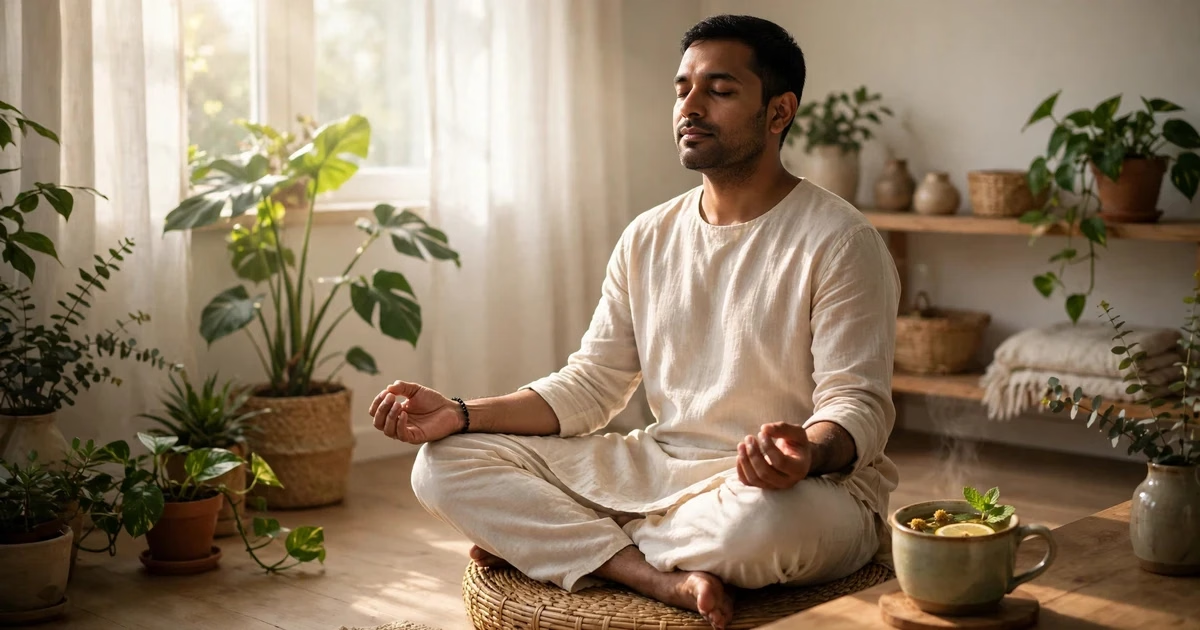
Daily gratitude journaling, writing just three things you are grateful for each morning, is a simple practice that many people find reduces anxiety and shifts the mind toward a more positive baseline over time. Ten minutes of meditation or focused breathwork in the morning has a calming effect that lasts through the day. Start with just two minutes if ten feels too long, and increase slowly.
Burnout recovery for IT professionals, exam anxiety management for students, and work-life balance for working parents are all part of the same picture. The common thread is rest: real rest, not scrolling. A weekly break from screens, a short walk without a phone, and a regular sleep schedule are small changes with large effects. If low mood, anxiety, or sleeplessness continue for more than a few weeks, or if they interfere with work or relationships, please speak to a doctor or a mental health professional. Self-care is important, but it is not a replacement for professional help when it is needed. Stress and poor sleep are also linked to early greying, so a calmer routine can even help if you are worried about the causes of white hair.
Natural Beauty the Indian Way
India’s diverse climate creates unique challenges for skin and hair. Harsh UV exposure in summers, humidity-induced breakouts during monsoons, and dryness in winters require solutions built specifically for Indian conditions, not advice designed for temperate European climates. The good news is that the best remedies are usually already in the kitchen.
For glowing skin: A face pack combining besan, haldi, and rose water brightens skin tone and deep-cleanses pores naturally. To use it, mix two spoons of besan with a pinch of haldi and enough rose water to make a smooth paste. Apply it to a clean face, leave it for 15 minutes, and wash it off with lukewarm water. Use it twice a week. Aloe vera gel manages sunburn, acne, and pigmentation across all skin types: apply fresh gel directly from the leaf, leave it for 20 minutes, and rinse. Sandalwood paste provides cooling relief and reduces redness during summer months. For more everyday ideas, see our beauty tips guide, our skin care in Hindi guide, and our natural glowing skin tips.
For hair: Amla oil remains the trusted choice for preventing premature greying and strengthening roots from within. Warm a little amla oil, massage it into the scalp, leave it for an hour or overnight, and wash it out with a mild shampoo. Bhringraj is the Ayurvedic herb most strongly associated with hair regrowth and scalp health, and bhringraj oil is widely available. Onion juice is traditionally used for reducing hair fall: apply fresh onion juice to the scalp, leave it for 30 minutes, and wash it out well, since the smell is strong. Results vary from person to person, and no home remedy can replace medical treatment for serious hair loss. A squeeze of lemon juice mixed with coconut oil is another traditional scalp remedy, but it should be used in small amounts, since lemon can irritate sensitive skin.
The basics matter most: No face pack can compensate for poor sleep, too little water, or constant stress. Drink enough water through the day, sleep seven to eight hours, eat vegetables and fruit daily, and protect your skin from the midday sun with a hat or scarf. Beauty, in the Indian tradition, is a result of a healthy life, not a product you buy.
Final Thoughts
A healthy life stands out not because it sells products or promotes trendy wellness fads, but because it brings Indians back to what has always worked. Jeera water in the morning. Sunlight on the skin. Tulsi tea. Pranayama. Seasonal eating. Strong family bonds. These are not expensive habits. They are ordinary habits, done with intention.
The most important thing this guide can teach is that real wellness in India does not have to be expensive. It just has to be intentional. Start with one pillar, not all six. Walk for 30 minutes every morning for a month. Or eat dinner before 7 PM. Or put the phone away after 9 PM. One habit, kept for a month, changes more than ten habits started and abandoned in a week.
Whether you are a student managing exam pressure, a professional battling burnout, a parent trying to build healthy habits for your family, or a senior citizen looking to maintain vitality, a healthy life has something genuinely useful for you. And most of it is completely free. If digestive problems keep returning, take them seriously: eat lighter, drink warm water, avoid very spicy and fried food for a few days, and see a doctor if the problem continues. Our ancestors built a way of living on these principles. It is time to reclaim them, one small habit at a time.
Frequently Asked Questions
What is a healthy life?
A healthy life is a way of living that covers food, movement, sleep, mental wellness, and natural self-care together, in a way that fits your culture, your budget, and your daily routine. In India, that means Ayurveda, Indian kitchen foods, yoga, walking, and simple habits, not expensive products or imported diets.
Is this guide suitable for all age groups?
Yes. The practices in this guide cover wellness for children, working adults, pregnant women, seniors above 60, and people managing chronic conditions, making it a complete resource for the entire family. Children and seniors should start gently, and anyone with a medical condition should check with a doctor before starting new exercises or herbs.
Can I follow these tips on a limited budget?
Absolutely. The majority of recommendations use everyday Indian kitchen ingredients and free physical practices like walking, yoga, and pranayama. Expensive supplements are never needed. A morning walk, dal-chawal, haldi doodh, and tulsi tea cost almost nothing.
Does a healthy life include mental health?
Yes, and it should be talked about openly. A healthy life covers stress management, sleep improvement, digital detox, burnout recovery, and exam stress in ways that are practical and stigma-free. If low mood or anxiety continues for weeks, please speak to a doctor or a mental health professional.
How is Indian wellness different from other health advice?
It is built specifically for Indians, covering regional foods, Ayurvedic traditions, climate-specific beauty advice, and culturally relevant wellness practices that generic international platforms cannot offer. The same advice that works in a cold European climate may not suit a hot, humid Indian summer, which is why Indian guidance needs Indian context.
How do I start if I feel overwhelmed?
Pick the easiest habit, not the most impressive one. A 30-minute morning walk is a good first step for most people. Do it every day for two weeks. Then add one more habit, such as drinking warm water in the morning or eating dinner before 7 PM. Small habits, kept for a long time, build a healthy life far better than a big plan that lasts three days.
6 thoughts on “Healthy Life WellHealthOrganic: The Ultimate Indian Wellness Guide for 2026”