
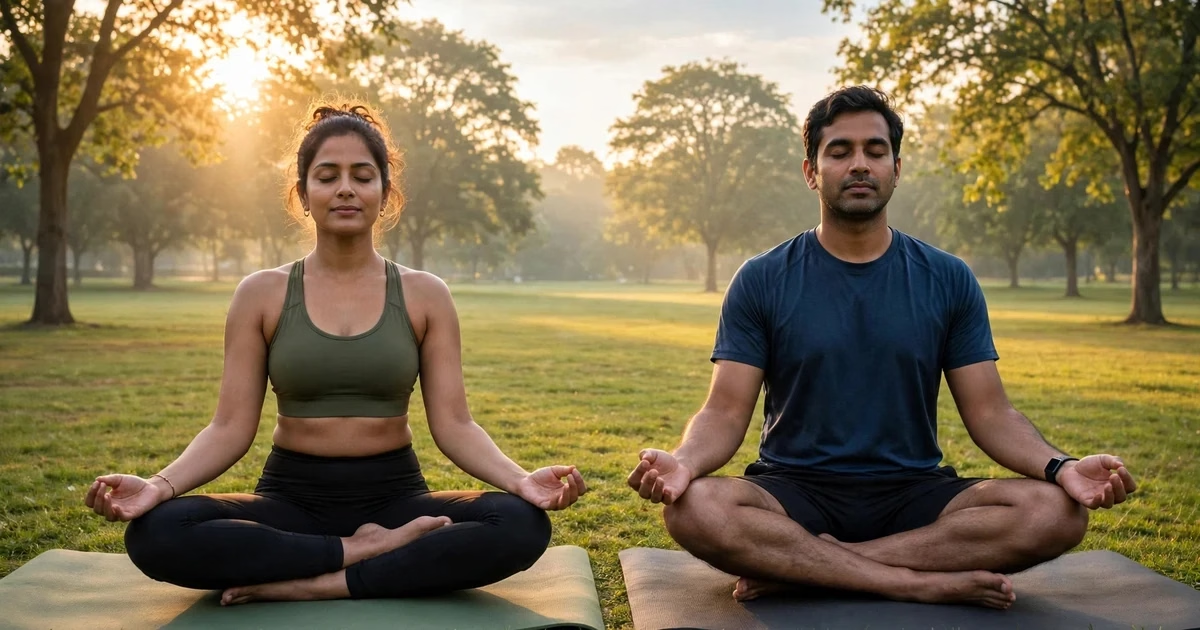
Staying fit in today’s India is harder than it looks. Long office hours, unhealthy food choices, screen addiction, and rising stress levels are pulling millions of Indians away from their natural health. This is exactly where natural fitness becomes a game changer.
Unlike gym obsessed Western fitness culture, natural fitness is built around a holistic, natural, and sustainable approach that fits perfectly into the Indian lifestyle, without expensive supplements, extreme diets, or complicated routines.
This complete guide covers everything you need to know about natural fitness in 2026, from understanding what it truly means to practical workout plans, organic nutrition, Ayurvedic fitness wisdom, mental wellness, and a daily routine you can actually follow.
Please read first: This article is for general information only and is not medical advice. If you have a heart condition, diabetes, joint problems, high blood pressure, or any other medical condition, please talk to your doctor before starting a new exercise or diet routine. Pregnant women should also check with their doctor before beginning yoga or any workout plan.
What Is WellHealthOrganic Fitness?
WellHealthOrganic fitness is not just about building muscles or losing weight. It is a complete wellness philosophy that integrates physical movement, organic nutrition, mental balance, and Ayurvedic principles into one sustainable lifestyle system. At its heart, it is natural fitness in the truest sense: fitness that grows out of daily Indian life rather than being imported from a gym brochure.
The core idea is simple. Your body performs at its absolute best when it receives clean food, consistent movement, adequate rest, and mental peace, all sourced from nature rather than laboratories. This approach rejects crash diets, synthetic supplements, and punishing workout schedules in favour of gradual, meaningful, and long lasting transformation.
For Indians specifically, this approach carries special relevance. India’s ancient traditions, yoga, pranayama, Ayurvedic diet, and seasonal living, are not old fashioned concepts. They are time tested foundations of genuine fitness that the modern world is now rediscovering. WellHealthOrganic fitness brings these traditions together with current exercise science to create something uniquely powerful for the Indian body and mind.
The difference is easy to feel. A gym routine asks you to carve out a separate part of your life for fitness. Natural fitness weaves movement, food, breathing, and rest into the life you already live, so it survives busy weeks, festivals, travel, and family duties.
Why WellHealthOrganic Fitness Is Perfect for Indians
India is facing a serious fitness crisis. Many Indian adults do not get enough physical activity in a normal week. Urban Indians consume more processed food than ever before, and stress related lifestyle diseases are growing at alarming rates. Desk jobs, long commutes, and late dinners have made inactivity the default for a large part of the population.
This approach addresses this crisis by offering solutions that are:
Affordable: Most of these practices, walking, yoga, bodyweight exercises, and home cooked organic food, cost little to nothing. No gym membership is required, which matters in a country where a gym membership can feel like a luxury.
Culturally aligned: It draws from yoga, Surya Namaskar, pranayama, and Ayurvedic nutrition, practices that are already embedded in Indian culture and tradition. You do not need to learn a foreign system. You are returning to something your grandparents already understood.
Practical: Every workout and nutrition recommendation in this guide is designed for real Indian homes, real Indian kitchens, and real Indian schedules. The exercises need a mat and a small patch of floor. The food comes from the local market, not a supplement store.
Sustainable: Because it is built on enjoyable, natural habits rather than extreme regimens, people actually stick to it, and that consistency is what produces lasting results. A routine you enjoy for ten years beats a routine you quit in ten days.
The Five Pillars of WellHealthOrganic Fitness
The system rests on five pillars. Each one is simple on its own, but together they cover the whole of health: how you move, how consistently you show up, what you eat, how you breathe and think, and how you rest.
1. Functional Movement Over Aesthetic Exercise
The foundation is functional exercise, movement that improves how your body performs in real life, not just how it looks in the mirror. Squats, lunges, planks, push-ups, and yoga asanas all fall into this category. They build strength, flexibility, balance, and coordination simultaneously, and they make everyday tasks, climbing stairs, carrying groceries, playing with children, easier.
The most powerful functional exercise recommended in this guide for Indians is Surya Namaskar, the Sun Salutation. Twelve rounds of Surya Namaskar work every major muscle group, improve cardiovascular health, increase flexibility, and support respiratory function, all in approximately fifteen minutes with zero equipment required. It is a complete workout in itself, and it has been practised in Indian homes for generations.

For beginners, a 30 minute morning walk remains the single most effective and accessible starting point for anyone new to fitness. Walking is gentle on the knees, needs no equipment, and fits into any schedule. Doctors and fitness experts widely recommend regular walking for heart health, mood, and weight management, and it works better as a daily habit than an occasional intense workout. If you want to build muscle over time, bodyweight exercises such as squats and push-ups can be added gradually to the same routine.
Functional movement also protects your joints. Unlike heavy gym machines that isolate one muscle at a time, natural movements train the body as one connected system, which supports long term joint health and mobility.
2. Consistency Over Intensity
One of the most important principles here is that consistency beats intensity every single time. Twenty minutes of daily movement produces dramatically better long term results than two hour weekend gym sessions followed by five days of inactivity.
This approach recommends building a non negotiable daily movement habit, even if it starts as a ten minute stretch or a short walk. Over weeks and months, these small consistent actions compound into genuine physical transformation. This principle is directly aligned with the Ayurvedic concept of dinacharya, a disciplined daily routine that supports physical and mental health through regularity rather than extreme effort.
Consistency also makes fitness forgiving. Missing one day does not ruin anything. What matters is the pattern across a month, not perfection on a single day. People who forgive a missed workout and return the next morning succeed far more often than people who treat one slip as a failure and quit.
A practical way to stay consistent is to attach movement to something you already do every day. Walk after lunch. Stretch while the evening tea brews. Do Surya Namaskar right after brushing your teeth in the morning. When movement becomes part of an existing routine, willpower is no longer needed.
3. Organic Nutrition as Fitness Fuel

This approach treats food as medicine, a concept that Indian tradition has taught for thousands of years. What you eat directly determines your energy levels, recovery speed, hormonal balance, and mental clarity. No workout program can compensate for consistently poor nutrition.
The nutrition approach for Indians centres on what is already available in the Indian kitchen:
| Food | Benefit |
|---|---|
| Desi Ghee | Supports joint lubrication, hormone production, and sustained energy |
| Turmeric (Haldi) | Helps the body recover from exercise related soreness |
| Amla | Provides Vitamin C for collagen repair and immune support after exercise |
| Ragi | Delivers calcium and slow release carbohydrates for sustained workout energy |
| Moong Dal | Offers easily digestible protein for muscle recovery |
| Banana | Provides potassium and natural sugars for pre workout energy |
| Coconut Water | A natural drink that helps replace fluids lost through sweat |
This guide strongly discourages processed protein powders and artificial supplements for most Indians. The reality is that a well structured Indian diet, dal, chawal, sabzi, curd, and seasonal fruits, already provides everything the body needs for excellent fitness results when consumed consistently and in correct proportions.
Timing matters as much as content. A light meal two to three hours before a workout, such as a banana or a handful of soaked nuts, gives steady energy. After a workout, a protein rich meal such as moong dal, curd, or paneer helps the muscles recover. And the evening meal deserves special care: heavy, late dinners disturb sleep and slow recovery, which is why ayurvedic dinner foods such as khichdi and light soups are a better choice at night than fried food. A small piece of jaggery after dinner is a traditional, lighter sweet than refined sugar.
4. Pranayama and Mental Fitness
This approach recognises something that most conventional fitness programs completely ignore: mental fitness is inseparable from physical fitness. Chronic stress raises cortisol levels that directly sabotage fat loss, muscle building, sleep quality, and immune function. No matter how perfect your workout and diet, unmanaged stress undermines all of it.
Pranayama, the yogic practice of controlled breathing, is the natural fitness solution for mental wellness. Specifically:
Anulom Vilom (alternate nostril breathing) practised for ten minutes daily is a simple, time tested way to calm the mind, improve lung capacity, and balance the nervous system. It is one of the simplest mental fitness tools available to Indians, and it needs nothing but a quiet corner and ten minutes.
Kapalbhati performed for five to ten minutes each morning strengthens the diaphragm, improves oxygen exchange, stimulates the digestive organs, and energises the body for the day ahead, effectively functioning as both a fitness exercise and a stress management tool at the same time.
This guide recommends combining pranayama with ten minutes of morning meditation to create a mental fitness practice that takes less than twenty minutes but delivers noticeable improvements in focus, mood, and resilience within a few weeks. Many people find that this short morning practice changes the whole tone of their day: less reactivity, better patience, and steadier energy.
Breathing practice also helps during the workout itself. Slow, controlled breathing during yoga and stretching keeps the heart rate steady and prevents the gasping, rushed feeling that makes beginners quit. Learning to breathe well is, in a real sense, learning to exercise well.
5. Rest and Recovery as Active Fitness
Perhaps the most underrated aspect of this approach is the emphasis on rest as an active component of health, not a passive absence of activity. Muscles grow during rest, not during exercise. The immune system rebuilds during sleep, not during waking hours. Mental processing and emotional regulation are restored through quality rest.
This guide recommends 7 to 8 hours of consistent nightly sleep, with a wind down routine that avoids screens for at least one hour before bed. Warm buffalo milk with turmeric before sleep, a classic Ayurvedic recommendation, is a soothing bedtime drink that many Indian families have used for generations.
Rest also means planned rest days. The body adapts to training during recovery, so a week with no rest day is not a sign of dedication, it is a shortcut to fatigue and injury. One full rest day per week, plus lighter days built into the plan, keeps progress steady for months instead of stalling after a few weeks.
Sleep quality deserves the same attention as workout quality. A fixed sleep and wake time, a cool dark room, and no heavy food or bright screens late at night do more for recovery than any supplement. People who protect their sleep usually find that their workouts feel easier and their appetite stays under control.
WellHealthOrganic Fitness Workout Plan for Indians (No Gym Required)
Here is a practical weekly routine built entirely around Indian home conditions. It needs no equipment, costs nothing, and can be completed in 40 to 45 minutes per day.
Monday, Wednesday, Friday, Strength and Flexibility: 12 rounds Surya Namaskar (15 minutes); Squats, 3 sets of 15; Push-ups, 3 sets of 10 to 12; Plank hold, 3 sets of 30 to 45 seconds; Trikonasana, Virabhadrasana, Setu Bandhasana (10 minutes).
Tuesday, Thursday, Cardio and Breathing: 30 minute brisk walk or cycling; 10 minutes Anulom Vilom pranayama; 5 minutes Kapalbhati.
Saturday, Active Recovery: 20 minute gentle yoga stretching; 15 minute meditation; Light walking.
Sunday, Full Rest.
This weekly plan produces visible improvements in strength, endurance, posture, mental clarity, and body composition when practised consistently for 60 to 90 days. If 40 minutes feels like too much at the start, begin with 15 minutes and add five minutes each week. A short routine done daily always beats a long routine done rarely.
Warm up before every session, even a short one. Five minutes of gentle marching in place, arm circles, and slow neck and shoulder rolls prepare the muscles and joints and reduce the risk of strains. Cool down the same way, with slow stretching and deep breathing, so the body returns to rest gradually.
People who sit for long hours at a desk should add one more habit: stand up and stretch for two minutes every hour. Sitting for long hours stiffens the hips, weakens the back, and slows circulation, and no single workout fully cancels a whole day in a chair. Short movement breaks through the day are a quiet but powerful part of natural fitness.
WellHealthOrganic Fitness for Different Age Groups
One of the most important aspects of natural fitness is its genuine inclusivity. Unlike specialised gym programs designed for young adults, natural fitness has specific guidance for every life stage:
Teenagers (13 to 19): Focus on bodyweight exercises, sports, outdoor activity, and yoga to build foundational strength and healthy habits before adult responsibilities create time constraints. Teenagers should avoid heavy weightlifting without supervision and focus instead on movement they enjoy.
Working Adults (20 to 45): Prioritise consistency over duration. The natural fitness approach for this group emphasises efficient morning routines, desk break stretching, and weekend active recreation to counteract sedentary work patterns. A 20 minute morning routine done before the day starts is more reliable than an evening plan that collapses after a long day at work.
Women Post-Pregnancy: Natural fitness recommends a gradual return to activity starting with walking and gentle yoga, with specific asanas like Baddha Konasana and Viparita Karani that support pelvic floor recovery and hormonal rebalancing. Every body recovers at its own pace, so progress should be guided by comfort and by the doctor’s advice, not by a fixed timeline.
Senior Citizens (60+): Chair yoga, gentle walking, Anulom Vilom, and resistance band exercises maintain mobility, balance, and cardiovascular health without joint strain. Natural fitness specifically addresses the needs of this group, which is often completely ignored by mainstream fitness content.

Whatever your age, the starting point is the same: begin where you are, not where you think you should be. A teenager, a busy parent, and a retired grandparent all benefit from the same foundations, daily movement, real food, breathing, and sleep, adjusted to what the body can comfortably do today.
How Natural Fitness Helps Your Skin, Hair and Digestion
Fitness shows on the outside as well as the inside. Regular movement improves blood circulation, which carries oxygen and nutrients to the skin. Sweating during exercise helps clear the pores, and better sleep, which follows regular exercise, gives the skin time to repair. This is why people who exercise consistently often notice their skin looking fresher, and why a good skin care routine works best alongside daily movement rather than instead of it.
Stress is also a major trigger for hair fall and early greying, and stress is exactly what pranayama and regular exercise help to reduce. Calmer days, better sleep, and improved circulation support healthier hair from the roots. Good digestion matters here too: when the gut is working well, nutrients reach the hair and skin properly. Simple home remedies such as warm lemon juice water in the morning can support digestion, and a calm, regular routine supports the whole system. If hair fall or digestive trouble continues for weeks, it is worth talking to a doctor rather than relying on home care alone.
Movement also helps digestion directly. A gentle walk after meals, a habit common in many Indian families, supports the stomach and reduces bloating. Yoga poses that gently compress and release the abdomen, such as Pawanmuktasana, are traditionally used for the same reason. Fitness, digestion, skin, and hair are not separate topics. They are one system, and natural fitness treats them that way. A healthy life is built from these connected habits, not from any single trick.
Common WellHealthOrganic Fitness Mistakes to Avoid
Even with the best intentions, these mistakes undermine natural fitness progress:
Skipping warm up and cool down: Cold muscles under sudden load cause injury. Five minutes of gentle movement before and after every workout is non negotiable.
Expecting overnight results: Natural fitness is a gradual, cumulative process. Visible results typically emerge after four to six weeks of consistent practice. People who quit before this point miss the transformation entirely.
Neglecting nutrition: Exercise without dietary improvement delivers partial results at best. Both pillars, movement and nutrition, must function together.
Ignoring sleep: Consistently sleeping less than six hours while following a fitness program creates a tired, stressed state that makes fat loss harder and increases injury risk significantly.
Comparing progress to others: Fitness is deeply personal. Body types, starting fitness levels, age, and metabolic rates vary enormously. The only valid comparison in natural fitness is your current self versus your past self. Social media fitness photos are a poor guide: they show a moment, not a routine, and they rarely show the years of work behind it.
Doing too much too soon: Enthusiasm in the first week often leads to sore muscles, exhaustion, and quitting by the second week. Start with half of what you think you can do, and build up slowly. The body adapts best to small, steady increases.
Frequently Asked Questions About WellHealthOrganic Fitness
What makes WellHealthOrganic fitness different from regular gym fitness?
WellHealthOrganic fitness integrates physical exercise with organic nutrition, Ayurvedic practices, and mental wellness. It prioritises long term sustainable health over short term aesthetic results, and it is designed specifically for the Indian lifestyle and body.
Can I follow natural fitness without going to a gym?
Absolutely. The entire natural fitness framework is built around home based practices: Surya Namaskar, yoga, pranayama, bodyweight exercises, and walking. No gym membership or equipment is needed.
How soon will I see results with natural fitness?
Minor improvements like better energy, improved sleep, and reduced bloating appear within two weeks. Visible physical changes, improved strength, better posture, weight changes, become noticeable after four to six weeks of consistent daily practice.
Is natural fitness suitable for people with chronic conditions?
Natural fitness supports overall health and can complement medical management of chronic conditions. However, individuals with serious health conditions should consult their doctor before starting any new exercise program, and should start slowly under guidance.
What should I eat before and after a natural fitness workout?
Before a workout, a banana or a small bowl of soaked nuts provides quick, natural energy. After a workout, a glass of warm buffalo milk, a bowl of moong dal, or curd with fruit provides protein and nutrients for muscle recovery, all consistent with natural fitness nutrition principles.
Do I need supplements for natural fitness?
For most people, no. A balanced Indian diet with dal, vegetables, curd, seasonal fruit, and whole grains covers the basics. Supplements are only worth considering if a doctor finds a specific deficiency. Food first is the natural fitness rule.
Conclusion
Natural fitness represents something genuinely important for India in 2026, a return to a fitness philosophy rooted in nature, tradition, and sustainability rather than expensive gym culture and artificial supplementation.
The truth is that India already possesses everything needed for extraordinary fitness: yoga, pranayama, Surya Namaskar, Ayurvedic nutrition, seasonal organic food, and a cultural value system that honours the body as a temple. WellHealthOrganic fitness simply brings all of these elements together into a coherent, practical, and grounded daily practice.
Start today, not with a dramatic overhaul, but with one small change. Wake up fifteen minutes earlier. Do twelve rounds of Surya Namaskar. Drink warm lemon water. Walk for thirty minutes. These are not small actions, they are the foundation of transformational health. And it proves, consistently, that the most powerful fitness system in the world has always been the one rooted in nature.


2 thoughts on “WellHealthOrganic Fitness: Complete Guide to Natural Fitness for Indians (2026)”