

You may have heard the words artificial intelligence in the news, in your office, or even in your family WhatsApp group. Many people think it is only about robots or chatbots that write essays. But one place where it is quietly changing daily life is the hospital and the clinic. From reading an X-ray to reminding you to take your medicine, AI in healthcare is now part of how many Indians get care, sometimes without even knowing it.
This guide explains it in plain language, made for Indian readers. You will learn what AI really means, how it helps doctors find illness early, how it powers telemedicine and health apps, what its limits are, and how you can use AI health tools safely. You do not need any technical knowledge to read this. A healthy life still depends on simple daily habits, and technology can only support those habits, never replace them.
Please read this first: AI in healthcare is a support tool, not a doctor. An app, a chatbot, or a scan report from a machine cannot diagnose you or tell you what treatment you need. If you feel unwell, have a new symptom, or are worried about your health, talk to a real doctor. Never start or stop any medicine, and never delay a hospital visit, because of what an AI tool told you. This article shares general information only. It does not replace a doctor’s advice.
What Is AI in Healthcare?
AI in healthcare means using computer programs that can learn from large amounts of medical information and then help with health related work. An AI system studies thousands of examples, like X-ray images or patient records, and learns to spot patterns in them. After this learning, it can look at a new X-ray and point out something unusual, or read a set of symptoms and suggest which tests a doctor might consider.
Think of it like a very fast assistant that has read a huge library of medical books and reports. It does not get tired, and it can check a scan in seconds. But it does not truly understand a patient the way a doctor does. It cannot hear the full story of your pain or know your family history unless someone tells it. That is why a trained doctor should stay in charge and use the machine as a helper, not as a replacement.
AI in Diagnosis and Medical Tests
The most talked about use of AI is in diagnosis, which means finding out what illness a person has. In India, there are far fewer specialist doctors than patients need, especially outside big cities. A good AI tool can help a doctor or a health worker catch a problem early, when treatment is usually simpler and cheaper.
Reading X-Rays and Scans
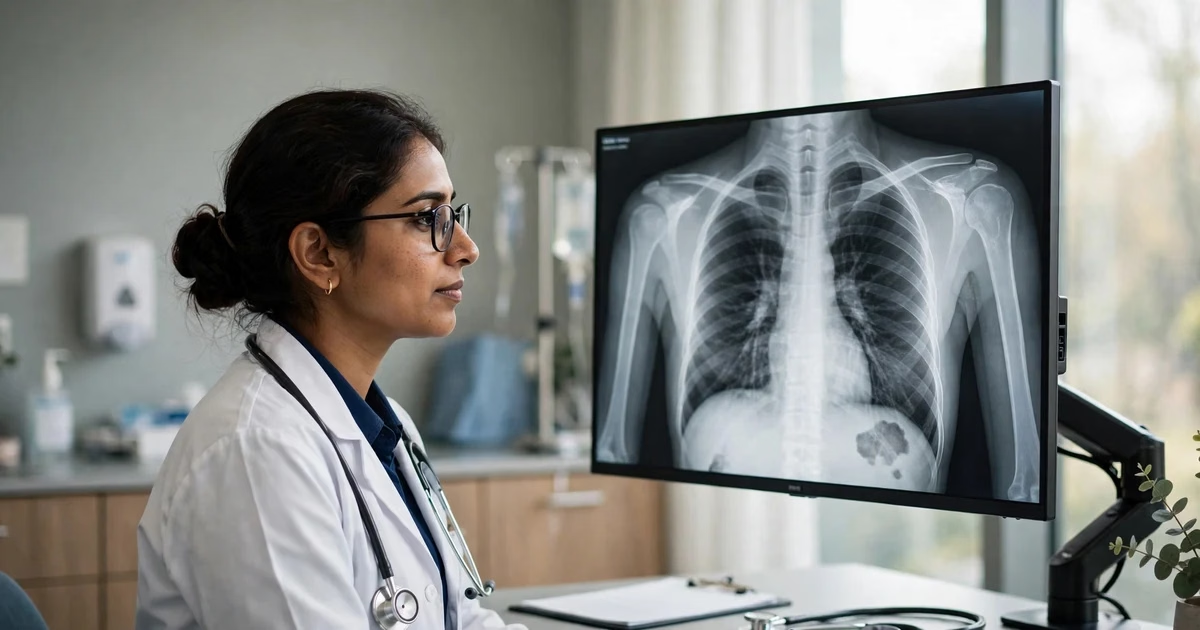
One of the oldest and most useful jobs for AI in healthcare is reading medical images. An AI program can look at a chest X-ray and highlight areas that may show infection or fluid, and it can sort urgent cases first, so a serious report is not left waiting in a long line. Indian companies are active in this field. Qure.ai, a Mumbai based health technology company, builds AI tools that analyse chest X-rays and CT scans, and its tools are used in many hospitals and clinics across India, including in tuberculosis screening programs run with the government.
Eye Tests and Diabetes
Diabetes affects crores of Indians, and one of its quiet dangers is damage to the eyes, called diabetic retinopathy. It often has no symptoms in the early stage, and by the time vision becomes blurry, the damage may be serious. AI in healthcare helps here in a simple way. A health worker takes a photo of the inside of the eye with a special camera, and an AI tool checks the photo for early signs of damage. If it finds something, the patient is sent to an eye specialist quickly. This matters most in small towns and villages, where an eye specialist may visit only once a week or once a month.
Cancer Screening
Cancer is easier to treat when it is found early, but early cancer often has no clear symptoms. AI in healthcare is being tested and used for screening of breast cancer, cervical cancer, and lung cancer, the cancers that affect many Indians. For breast cancer, an Indian company called Niramai uses thermal imaging and AI to spot unusual patterns, without radiation and without physical contact. This kind of screening can reach women in places where a mammography machine is not available. It is important to be honest here. AI screening does not prove that a person has cancer or does not have it. It only flags people who need a proper check by a doctor, with the right tests. A clear AI result is not a clean bill of health, and a flagged result is not a diagnosis.
Finding TB and Other Infections
India has one of the largest tuberculosis burdens in the world, and AI in healthcare supports the national effort to end TB in a practical way. In many districts, chest X-rays are screened by AI tools first, and people whose X-rays look suspicious are called for a confirmatory test. This saves the time of the few radiologists available and helps health workers cover more villages in less time. If your stomach is upset or you have loose motions, learn the early signs of gastroenteritis, because early care matters more than any machine. AI can speed up the work, but it cannot replace the simple habit of noticing symptoms early and visiting a doctor on time.
AI in Telemedicine and Doctor Consultations
Telemedicine means consulting a doctor over a phone or video call instead of visiting a clinic. It grew fast during the Covid years, and it has stayed, because it saves travel time and money for crores of Indians. AI makes telemedicine stronger in quiet ways.

eSanjeevani and Government Telemedicine
The Indian government runs a telemedicine service called eSanjeevani, which connects patients at small health centres with specialist doctors at bigger hospitals. A health worker at a village clinic helps the patient talk to a specialist over video, and the specialist can advise on treatment without the patient travelling for hours. AI in healthcare helps such platforms by organising patient information and suggesting the right specialist for a problem, so the doctor spends the call on the patient, not on paperwork. For a patient in a small town, this can mean the difference between waiting weeks for a specialist visit and speaking to one the same day.
Chatbots and Symptom Checkers
You may have met a health chatbot on a hospital website or a health app. It asks a few questions about your symptoms and then suggests whether you need urgent care, a routine visit, or simple home care. This is AI in healthcare at its most visible, and also at its most risky if used carelessly. A chatbot can be useful for simple things, like finding the right department in a hospital, booking an appointment, or giving general information about a condition in simple language. But a chatbot is not a doctor, and its answer is only as good as the questions you answered. It cannot examine you, and many people describe their symptoms in a hurry or leave out an important detail. Use chatbots for information and booking, not for diagnosis. If a chatbot tells you that your symptoms need urgent care, take it seriously and see a doctor.
AI in Wearables and Daily Health Tracking
A wearable is a device you wear on your body, like a smartwatch or a fitness band, that tracks your health through the day. Millions of Indians now wear one, and AI lives inside these small devices. They count your steps, measure your heart rate, track your sleep, and remind you to move when you have sat too long.
Smartwatches and Heart Rate
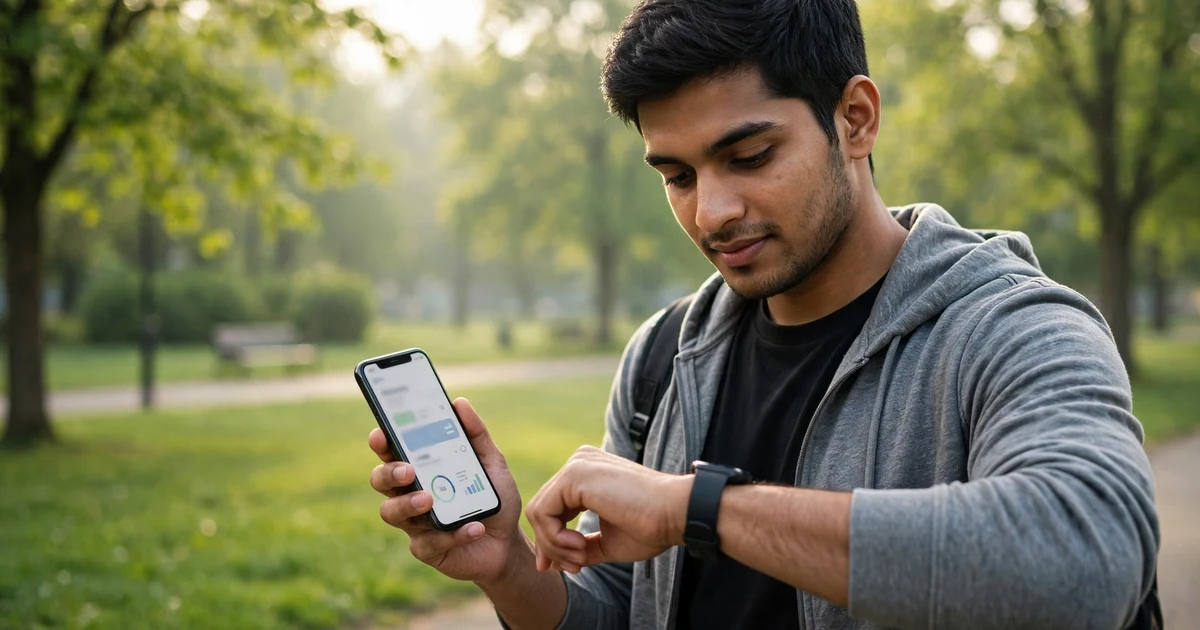
A smartwatch uses light sensors to measure your pulse through the day and night. AI in healthcare turns those raw numbers into useful information, like your resting heart rate trend over a month, or an alert if your heart rate stays unusually high while you are resting. This is helpful, but it has limits. A watch is not a medical device in the same way as a hospital ECG machine, and its reading can be wrong if the watch is loose, if you move a lot, or if your skin is very sweaty. Use your watch as an early warning friend, not as a doctor. If it often shows an unusual heart rate, or if you feel chest pain, breathlessness, or dizziness, do not wait for the watch to decide. Go to a doctor or a hospital at once.
Sleep, Steps, and Daily Habits
Most fitness bands track sleep by noticing when you stop moving and how your heart rate changes at night. AI in healthcare uses that pattern to estimate how long you slept and how much of it was deep sleep. The numbers are approximate, but they are still useful for spotting a trend over weeks. Step counting works in a similar way. A daily step goal, like 7,000 or 10,000 steps, is a simple target that many people find motivating. Regular fitness habits, like a morning walk, matter more than any single number on a screen. If your day involves sitting for long hours at a desk, a watch reminder to stand and walk for a few minutes every hour can help your back, your legs, and your energy.
Medicine Reminders and Health Apps
Many Indians take daily medicine for blood pressure, diabetes, or thyroid, and missing doses is one of the most common reasons treatment fails. AI in healthcare powers simple reminder apps that learn your routine and remind you at the right time, and some apps can even read a photo of your prescription and set up the schedule for you. Always check the schedule yourself, and ask your chemist or doctor if anything looks wrong, because a wrongly read medicine name can be dangerous. Health apps also collect your reports in one place, so you can show a doctor your old blood sugar readings or blood pressure readings on your phone. This is far better than carrying a plastic bag full of old papers to every visit.
AI in Hospitals and Health Records
Behind the scenes, AI helps hospitals run better. When you visit a big hospital, your details pass through many hands: registration, billing, lab, pharmacy, and the doctor’s room. AI tools help keep this chain smooth. One important part of this is the Ayushman Bharat Digital Mission, known as ABDM, which gives every Indian the option of a single digital health ID, called an Ayushman Bharat Health Account. With your consent, your health records from different hospitals can be linked to this account, so a new doctor can see your past reports quickly. The government has also launched the IndiaAI Mission to support artificial intelligence work across the country, including in health, so more Indian hospitals and startups are building AI tools meant for Indian patients, in Indian languages, for Indian conditions.
AI in Healthcare in India: What Is Different Here
India is not like other countries when it comes to health, and AI in healthcare here has to solve Indian problems. The first is distance. A large share of Indians live in villages, far from a specialist hospital, and travelling for a checkup can cost a full day’s wages. AI screening and telemedicine help close this distance by bringing the first check to the village itself, through a health worker with a phone or a portable device. The second is language. India has many languages, and a health tool that works only in English leaves out crores of people. AI tools are slowly learning Indian languages, so a patient can describe symptoms in Hindi, Tamil, Bengali, or Marathi and still be understood.
The third is cost. Good health care in India must be cheap, because most people pay from their own pocket. AI tools can help bring costs down by doing the first level of checking quickly and cheaply, so expensive specialist time is used only where it is truly needed. The fourth is trust. Many Indians, especially older people, trust a doctor they can see and talk to, not a machine. That trust is reasonable, and AI in healthcare should respect it. A good hospital will always tell you when AI is being used in your care, and a good doctor will explain the result in simple words.
Benefits of AI in Healthcare
The benefits of AI in healthcare are real, and they are already visible in Indian hospitals. The first benefit is speed. A machine can check a scan or a report in seconds, while a busy doctor may take much longer to reach the same file. Faster checking means faster treatment. The second benefit is early detection. Many diseases are silent at first, and AI tools are good at catching small changes that a tired human eye might miss. The third benefit is reach. AI in healthcare lets a single specialist help many more patients, because health workers in small towns can do the first screening with AI support and send only the serious cases forward.
The fourth benefit is less paperwork for doctors. When AI drafts notes and handles appointment reminders, doctors get more time to talk with patients. The fifth benefit is personal health awareness. A smartwatch or a simple health app can help you notice your own patterns, like poor sleep before a stressful day. That awareness can push you towards better habits, like walking daily and sleeping on time. When it comes to daily habits, a short period of fasting is something some people try, but it suits only healthy adults and needs a doctor’s advice for anyone with a medical condition. Good stress management matters just as much, because long term stress affects sleep, blood pressure, and digestion.
Limits and Risks of AI in Healthcare
It would be wrong to talk only about benefits. AI in healthcare has real limits, and knowing them keeps you safe. The first limit is mistakes. An AI tool can be wrong. It can miss a problem, or it can flag a problem that is not there. A missed problem can delay treatment, and a false alarm can cause fear and needless tests. That is why every AI result in a hospital should be checked by a trained doctor, and why no one should take a machine’s word as final. The second limit is biased or incomplete data. If an AI tool learned mostly from one group of people, it may work less well for others. A skin checking tool trained mostly on light skin may miss problems on dark skin.
The third risk is privacy. Your health information is sensitive. Your reports, your photos, and your records should be shared only with your consent, and only with people who truly need them. A step counting app does not need your full medical history. The fourth risk is overuse. When a test becomes cheap and easy, people may do it too often, or for no good reason. Too many tests can create anxiety without improving health. More data is not the same as better health. The fifth risk is losing the human touch. A machine can read a scan, but it cannot hold a patient’s hand or explain a serious illness gently. The best hospitals use AI to give doctors more time with patients, not less.
How to Use AI Health Tools Safely
If you want to use AI health tools, a few simple rules will keep you safe. First, use tools from known and trusted sources, like a well known hospital, a government service, or a health app with clear contact details and a privacy policy you can read. Avoid unknown apps that promise to diagnose any disease from a single photo. Second, treat every AI result as a starting point, not an answer. If a tool says your reading is normal, but you feel unwell, see a doctor. If it says something is wrong, do not panic. See a doctor and let the doctor confirm it with proper tests. AI in healthcare is a helper for the first step, and the doctor takes it from there.
Third, protect your information. Do not upload your full medical records or your family health history to a random website or chatbot. Share reports only with your doctor, your hospital, or a service you trust. Fourth, keep the basics strong. No AI tool can make up for poor sleep, no exercise, and unhealthy food. Eat balanced meals with dal, sabzi, roti, and seasonal fruit. If your diet lacks variety, ask your doctor whether you need a blood test for vitamin B12, because low levels are common in vegetarians. Care for your body with simple home remedies like warm water, rest, and light food when you have a minor cold, but see a doctor when symptoms stay or get worse. Remember that Ayurveda and modern medicine can both be part of your life, as long as you tell your doctor about any Ayurvedic medicine you take. Some people also think about a hair transplant after seeing online ads, but that is a surgical decision that needs a real consultation, not an AI chatbot’s opinion.
Frequently Asked Questions About AI in Healthcare
Can AI in healthcare replace my doctor?
No. AI is a support tool that helps doctors work faster and catch problems earlier, but it cannot replace a doctor. A doctor understands your full history, examines you, talks to you, and takes responsibility for your treatment. A machine does none of those things.
Is AI in healthcare safe for patients in India?
It can be safe when it is used properly, with a doctor checking every result and with your consent for using your data. The risk comes when people use unknown apps, share too much personal information, or follow a machine’s advice without a doctor’s check.
Can I use a health chatbot to check my symptoms?
You can use it to learn general information and to decide whether you need a doctor soon, but do not use it as a diagnosis. Describe your symptoms honestly, read the answer carefully, and see a doctor if the chatbot suggests urgent care, or if you still feel worried.
Do smartwatches give accurate health readings?
They give useful estimates for heart rate, steps, and sleep, but they are not as accurate as hospital machines. Their readings can be affected by a loose strap, movement, sweat, or skin tone. Use them to spot trends over weeks, not to judge a single reading.
Will AI make health care cheaper in India?
It can help, by making the first level of checking faster and cheaper. But AI is not magic, and it cannot fix the deeper problems of too few doctors, crowded hospitals, or high medicine costs on its own.
Should I worry about my health data being misused?
You should be careful, not scared. Share your health information only with your doctor, your hospital, or a trusted service, and read what permissions an app asks for before you agree. Use a phone lock, keep your apps updated, and avoid uploading full reports to unknown websites.
Final Words
AI in healthcare is no longer a story about the future. It is already here, in Indian hospitals, in village health camps, in telemedicine calls, and on the wrists of millions of Indians. Used well, it can make Indian health care faster, fairer, and more reachable for everyone.
But it is still only a tool, and a tool is only as good as the person who uses it. The doctor stays at the centre, your own judgement stays important, and the simple habits of good food, daily movement, proper sleep, and timely care still matter more than any machine. Use AI health tools with open eyes and a careful mind. Let them help you, but never let them decide for you. If you stay informed and keep your doctor in the loop, AI in healthcare can be a genuine help in your life.