
Almost every Indian family knows fasting well. Your grandmother may keep a vrat on Mondays, your neighbour may skip grains during Navratri, and your colleague may follow the 16:8 method for weight loss. The practice is not a new diet trend from abroad. It has lived in Indian homes for centuries, first as a religious habit and now also as a health habit.
This guide explains it in plain language, made for Indian readers. You will learn what it really means, the main types people follow, the benefits some people feel, and the risks you should know about. You will also find help on what to eat and drink, how to break a fast without upsetting your stomach, and a gentle plan for your first try. A healthy life is built on small daily habits, and a short daily fast can be one of them, but only when it suits your body.
Please read this first: fasting is not for everyone, and it is not a treatment for any disease. Pregnant women, breastfeeding mothers, children, people with diabetes, low blood pressure, kidney or liver problems, eating disorders, or anyone on regular medication should talk to a doctor first. If you feel dizzy, very weak, confused, or unwell, stop, eat something light, and get medical advice if the feeling does not pass. This article shares general information only. It does not replace a doctor’s advice.
What Is Fasting?
Fasting means choosing not to eat food, and sometimes not to drink, for a set period of time. The fast can last a few hours, a full day, or several days. Some allow water and other drinks, while some allow certain foods like fruits and milk, so a religious fast and a weight loss fast may look very different.
When you fast, your body first uses energy from your last meal, then starts drawing on stored energy after some hours without food. Many people say this break gives their stomach a rest and helps them feel lighter, and some say it helps them notice their hunger better, so they eat more mindfully when the fast ends. These are personal experiences, not promises, and results differ from person to person. A planned fast has a clear start and end, enough water, and proper food before and after. Going without food for too long with no plan can harm your health, so the difference matters a lot.
Why Indians Fast
In India, fasting has two main roots. One is faith, and the other is health. Many people fast on festival days or on a fixed day of the week as part of their religion. Others fast to manage their weight, rest their digestion, or build self control. Both reasons are valid, and many people mix the two without even thinking about it.
Religious Fasts in India
Hindus keep fasts like Ekadashi, Janmashtami, Shivratri, and the nine days of Navratri, often avoiding grains and salt, and eating fruits, milk, curd, and vrat foods like sabudana khichdi and kuttu ki roti. Muslims fast from dawn to sunset during Ramzan, without food or water in the daytime. Jains observe long and strict fasts, and Christians fast during Lent. For most of these fasts, the goal is not weight loss. People fast to feel close to God, to practise patience, and to share the discipline with family, and food is often offered in prayer first, then eaten together.
Health and Lifestyle Reasons
In recent years, many Indians have started fasting for health reasons. Some want to lose extra weight without a complicated diet, and some feel heavy after eating late at night, so they want a simple rule like finishing dinner early. Office workers who sit all day often say a short daily fast helps them avoid constant snacking. There is also a practical reason: the method costs nothing and needs no special food or equipment. That simplicity makes it attractive, but a free method is not always a safe one. A fast that works for a healthy young adult may be risky for an older person or someone with a medical condition. Your reason for fasting should decide the type you pick, and your health should decide whether you fast at all.
Types of Fasting
There are many ways to fast, each with its own rules, effort level, and risks. A beginner should start with the gentlest type. The methods below are the ones most Indians actually use, from modern schedules to traditional vrat.

Intermittent Fasting: The 16:8 Method
The 16:8 method is the most popular type of intermittent fasting, and it is also the easiest to start. You fast for 16 hours and eat all your meals inside an 8 hour window, for example dinner by 8 in the evening and the next meal at noon. Water, black tea, and black coffee are usually allowed during the fasting hours. It may help some people eat fewer calories without counting bites, because the eating window is shorter. Still, it works only if the meals inside the window are balanced. People with acidity should start with a shorter fast and watch how they feel.
The 5:2 Method
In the 5:2 method, you eat normally for five days and much less on two days that are not back to back, with small, light meals of vegetables, dal, curd, and fruit. Some find this easier than a daily schedule, because most days feel normal. This method needs more planning, because the two low days must still give your body enough nutrition, and heavy workers may feel weak on low days. Do not overeat on the normal days to make up for them.
Water Fast
A water fast means drinking only water for a set time, usually 24 to 72 hours, with no food, juice, tea, or milk. Some try it to give their digestion a full rest, but it is a hard fast, not a beginner method, and even healthy people can feel headaches, weakness, and low energy. A water fast longer than a day should be done only with a doctor’s guidance, because the body loses salts along with water. If you have never fasted before, do not start here.
Ekadashi and Vrat Fasts
Ekadashi comes twice a month, on the eleventh day of the lunar cycle, and many Hindus fast on this day. A vrat is a wider word for a religious fast kept on a chosen day, such as Monday for Lord Shiva or Tuesday for Hanuman. Rules differ by family. Some eat only fruits and milk, some eat one simple meal, and some avoid food and water till the evening prayer. Salt and grains are usually avoided, while sabudana, singhare ka atta, rajgira, fruits, and curd are common. The risk comes when vrat food turns into fried sabudana vada and heavy potato dishes, so keep the plate light with fruits, curd, nuts, and simple sabudana khichdi.
Navratri Fast
Navratri lasts nine nights, and many people fast for all nine days or for the first and last day. The food rules are similar to other vrat fasts: no grains, and no onion and garlic in many homes, with meals built around fruits, milk, curd, and vrat flours. Some eat one meal a day, others eat small vrat meals twice a day. A nine day fast needs more care than a one day vrat, since eating only fried food and sweets for nine days can cause acidity, constipation, and weight gain instead of lightness. People with diabetes, low blood pressure, or any medical condition should ask their doctor before a nine day fast.
Dry Fast
A dry fast means no food and no water for a set time. Nirjala Ekadashi follows this pattern for a day, and the Ramzan fast allows no food or water from dawn to sunset. A dry fast is the strictest type, and it carries the highest risk of dehydration. In hot Indian summers, going without water can quickly cause headaches, dry mouth, and weakness. Short dry fasts are a part of faith for many people. Still, no one should attempt a long dry fast for health reasons. If you feel very thirsty, dizzy, or unable to pass urine normally, break the fast with water right away.
What Happens in Your Body When You Fast
Your body treats a short fast as a quiet period, not an emergency, if you stay hydrated. In the first few hours, it uses glucose from your last meal, then starts using stored fat for energy. Insulin levels, which rise after eating, tend to fall during a fast. This is one reason some people find that their blood sugar feels more stable, though anyone with diabetes must never fast without a doctor’s advice. Your cells also carry out repair work during a fast, clearing out old and damaged cell parts in a process scientists call autophagy. Research on this is still growing, mostly from animal studies, so it is wise not to overstate what it means for humans. If your stomach often feels uneasy, learn the early signs of gastroenteritis, because fasting on an upset stomach can make the problem worse.
Benefits of Fasting
People fast for many reasons, and the benefits they report are just as varied. Some have research support, while others are mostly personal experience. A fast may help you, but it is not a cure, and it cannot replace good sleep, movement, and balanced meals.
Weight and Metabolism
The most common reason people try it is weight management. A shorter eating window often means fewer meals and fewer snacks, so many people eat less overall without feeling like they are on a strict diet. Some also find it helps them break the habit of eating out of boredom, though the effect depends on what you eat when the fast ends. Regular fitness habits like walking daily matter just as much.
Digestion and Gut Rest
Eating all day keeps the stomach working without a break. A fasting window gives the digestive system time to rest, and many people say they feel less bloated after a few weeks of a gentle routine. Some also find their appetite becomes more regular, so they feel hungry at meal times and full after eating, instead of grazing all day. Finishing dinner two or three hours before bed can help your sleep too, because the stomach is not busy digesting while you try to rest.
Mind and Focus
Some people say the practice helps them think more clearly, perhaps because without constant snacking and food choices, the mind feels less busy. Others say the discipline builds patience and self control, which then helps in other parts of life. These are personal reports, not proven effects for everyone. Some people feel the opposite and find it hard to focus when hungry. Both reactions are normal, and your own experience is the best guide.
Skin and Energy
Some people notice their skin looks fresher after a few weeks of regular short fasts, perhaps because they drink more water and eat less fried and sugary food. Good hydration and a balanced diet support the skin more than the fast alone, and your daily skin care routine and food choices work together. Energy is similar: some feel more energetic, others feel tired. A routine that leaves you dull and sleepy every day is a sign to change the method or stop.
What to Eat and Drink While Fasting
What you can eat and drink depends on the type of fast, so always follow the rules of the fast you chose. For a 16:8 day, water is the main drink during fasting hours, with plain water, jeera water, and herbal tea as common choices. Black tea and black coffee are usually allowed, but milk, sugar, and honey break the fast, since they add calories. Many people in India find simple home remedies like warm water with lemon or ajwain water help them feel settled during fasting hours, though these are comfort drinks, not treatments.
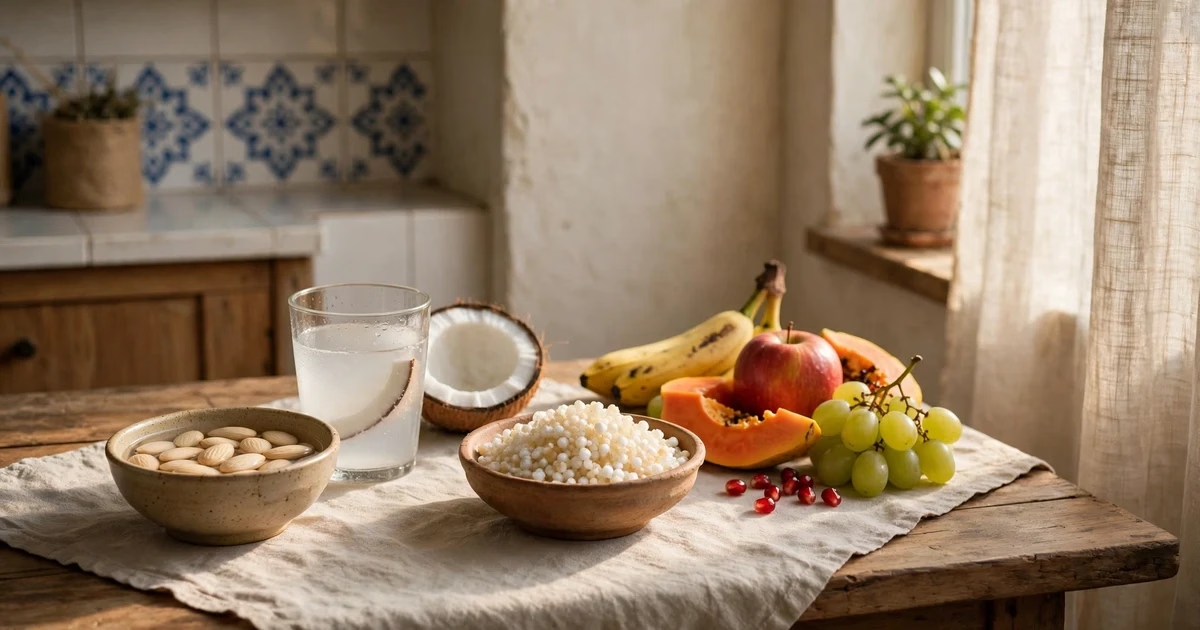
For religious fasts, the allowed foods are set by tradition. Fruits like banana, apple, papaya, and pomegranate give quick energy and are easy to digest, while milk, curd, and buttermilk add protein and help you feel full. Nuts like almonds and walnuts, soaked overnight, give healthy fats and keep hunger away longer. Sabudana khichdi, kuttu ki roti, and rajgira paratha are the usual vrat foods, and coconut water is a good drink on a fast day. Avoid fried vrat snacks, too many sweets, and heavy potato dishes, which can cause acidity and tiredness, and skip packaged namkeen, which is often full of salt and oil. If you feel a headache during a fast, it is often a sign that you drank too little water. A little jaggery with warm water is a common Indian habit after a fast, but take only a small piece, since it is still a form of sugar.
How to Break Your Fast Safely
How you end a fast matters as much as the fast itself. After hours without food, the stomach is sensitive, and a large, spicy, or oily meal can cause acidity and bloating. Many people make this mistake and then blame the fast, when the real problem was the first meal after it. The safe rule is simple: start small, eat slowly, and wait before eating a full meal.

The Ayurvedic Way to Break a Fast
Ayurveda treats fasting as a way to rest the digestive fire, known as agni, which should be woken up gently. That is why traditional Indian wisdom suggests starting with warm water, then a light and warm food like moong dal khichdi, before moving to a normal meal. Cold drinks, raw salads, and heavy fried food right after a fast are not advised in this view, since they can shock a resting stomach. A small bowl of curd or a glass of warm buffalo milk is another gentle choice. Use the same idea after a modern fast like 16:8. Start with water, then a small portion of fruit or soaked nuts. Wait 20 to 30 minutes, then eat your main meal with dal, sabzi, roti, and rice in normal amounts. For a Ramzan fast, dates and water are the traditional first bite, followed by a light meal.
Who Should Not Fast
Fasting is not safe for everyone, and this is the part people skip most often. Pregnant and breastfeeding women need regular meals for their own health and the baby’s growth. Children and teenagers are still growing, and long gaps without food can affect their energy and growth. Older people may also find it harder, because they can get dehydrated faster and may already take medicines that need food. People with diabetes should be very careful, because a fast can make blood sugar fall too low.
People with low blood pressure, kidney or liver problems, or a weak immune system should also avoid it unless a doctor says it is safe. Anyone with a history of eating disorders should stay away, because it can bring back unhealthy thoughts about food. If you take medicine with food, ask your doctor how a fast affects the timing.
Common Mistakes People Make While Fasting
The first mistake is starting too hard. People jump from three full meals a day to a 24 hour fast, then wonder why they feel ill. A fast should be built up slowly, like exercise. The second mistake is drinking too little water. A headache or dry mouth is often a sign of low water intake, not a sign that the fast is working. The third mistake is overeating after it ends, with fried snacks, sweets, and cold drinks all at once. This can cause stomach pain and acidity, and it can cancel out any benefit from eating less.
Another mistake is copying someone else’s routine without thinking about your own life. A friend who works from home may manage 16:8 easily, while a person who works in a factory or drives all day may feel weak on the same schedule. Your job, your health, your sleep, and your meals all decide which method suits you. If your day involves sitting for long hours at a desk, a short walk after meals will often help you more than a stricter fast. Listen to your own body first, and use other people’s stories only as ideas, not as rules.
A Simple Beginner Plan for Your First Week
If you are new to fasting and your doctor has no objection, this gentle plan can help you start. It uses a 12 hour overnight fast, close to a normal night of sleep, and adds only one change at a time.

- Day 1 and 2: finish dinner by 8 in the evening and eat breakfast at 8 in the morning. Keep dinner light, with dal, sabzi, and roti.
- Day 3 and 4: move breakfast to 9 in the morning, so the fast becomes 13 hours. Add a short morning walk of 15 to 20 minutes if you feel fresh.
- Day 5 and 6: move breakfast to 10 in the morning, making it a 14 hour fast. Keep meals balanced, with protein from dal, curd, or eggs, and vegetables in every main meal.
- Day 7: take a rest day with normal meal timings. Notice how you felt, and decide whether to continue with a 14 hour fast or stay at 12 hours for another week.
During this week, note your energy, sleep, and any headaches or acidity each day. If you feel good, you can slowly move towards 16:8 over the next two or three weeks. If you often feel weak or irritable, stay at the level that felt comfortable, or stop and focus on regular balanced meals instead. If your goal is to build muscle, remember that fasting alone will not do it. You still need enough protein and strength exercise on your eating days.
Frequently Asked Questions About Fasting
Can I drink water while fasting?
Yes, in most types you should drink water, and staying hydrated is one of the most important safety rules. The exception is a dry fast, like Nirjala Ekadashi or the daytime Ramzan fast, where water is avoided for religious reasons. Herbal tea and black tea or coffee without milk and sugar are usually allowed too.
Will fasting help me lose weight?
It may help some people, because a shorter eating window often means eating fewer calories. It is not a sure result. If you eat large amounts of fried food and sweets during the eating window, your weight may not change at all. Think of it as one tool among many, not as a shortcut.
Is fasting safe for people with diabetes?
People with diabetes should not fast without talking to their doctor first. A fast can make blood sugar fall too low, and that can be dangerous. A doctor can advise whether any type is safe for you and how to adjust meals and medicine timing. Never change your medicine timing on your own.
What should I eat after a fast?
Start with something light and warm, like water, fruit, or a small bowl of khichdi or curd. Wait a little, then eat a normal balanced meal. Avoid fried food, very spicy food, and large amounts of sweets as your first meal.
How long should a beginner fast?
A beginner should start with a 12 hour overnight fast, which is simply dinner at 8 and breakfast at 8. After a week or two of feeling fine, you can slowly stretch it to 14 hours, then 16 hours if it suits you. A comfortable fast you can keep for months is far better than a hard one you quit after three days.
Final Words
Fasting has been part of Indian life for a long time, from Ekadashi and Navratri to 16:8. It can help some people eat more mindfully and feel lighter, but it is not a magic fix and it is not for everyone. Start small, drink enough water, break the fast with light food, and listen to your body. If it leaves you calm and steady, keep it as a simple habit. If it leaves you tired or unwell, stop and talk to your doctor about what suits you.

