
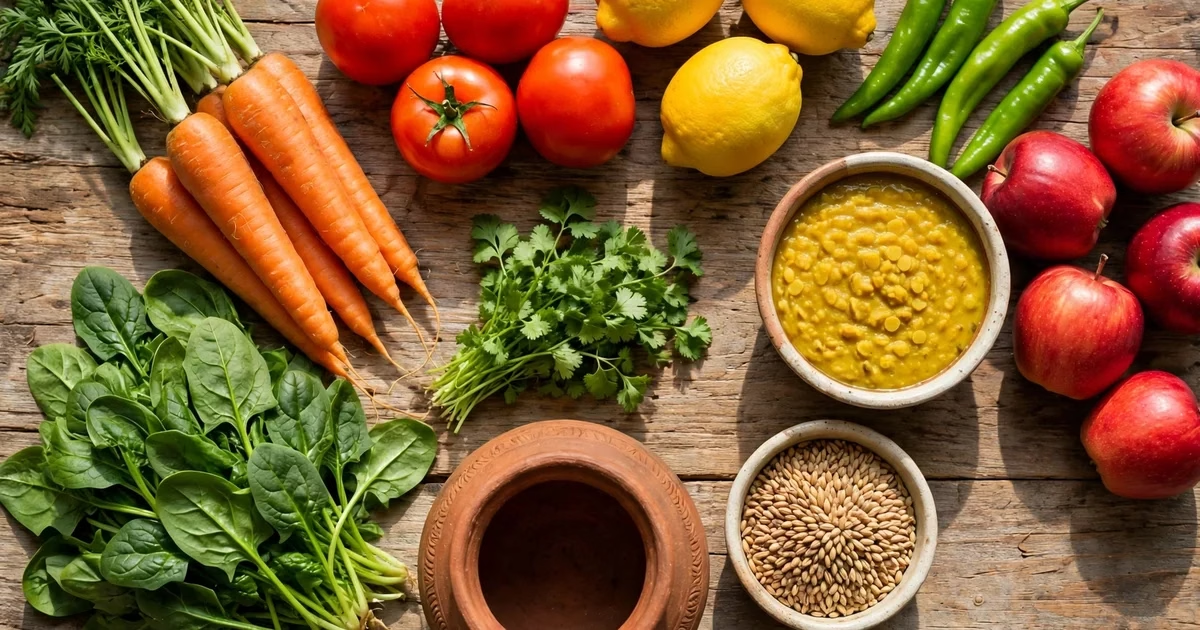
Walk through any Indian market today and you will see the word organic on packets of rice, dal, atta, and honey. Many families ask a simple question before they pay extra: is this food really better for us, or is it only clever packing? The question is fair, because organic food usually costs more, and a family should know what organic food benefits it can really expect before spending more every week.
This guide explains organic food benefits in plain language for Indian readers. You will learn what organic food means in India, how it is grown, what good it may do for you, and how to spot real organic food in a shop. You will also find help on what to buy first when money is tight, how to eat organic on a budget, and a simple seven day plan to begin. A healthy life is built on small daily food choices.
Please read this first: this article shares general information about food only. It does not treat, cure, or prevent any disease, and it does not replace a doctor’s advice. If you have diabetes, kidney or liver problems, food allergies, or any medical condition, talk to your doctor before changing your diet. If a food causes a rash, stomach pain, or breathing trouble, stop eating it and get medical help at once.
What Is Organic Food?
Organic food is grown and made without synthetic pesticides, chemical fertilisers, genetically modified seeds, and most artificial preservatives and colours. Organic farmers feed the soil with compost, cow dung, and green manure, and control pests with crop rotation, natural predators, and plant based sprays such as neem. Animals on organic farms get natural feed and are not routinely given antibiotics or growth hormones. The organic food benefits people talk about start with this way of growing, because what goes into the soil and onto the crop ends up on your plate.
In India this is not only a farming style, it is a legal category. Under the Food Safety and Standards (Organic Foods) Regulations 2017, a packaged food can be called organic only if it follows the National Programme for Organic Production (NPOP) or the Participatory Guarantee System (PGS-India) and carries the proper mark. The FSSAI mark for organic food is called Jaivik Bharat. When you see these marks on a pack, the claim has been checked.
Organic vs Natural vs Farm Fresh
Shoppers often mix up three words that sound similar but mean very different things, and this confusion is where many organic food benefits get lost in marketing. Natural has no legal definition in India, so any seller can print it. Farm fresh is also a marketing word that says nothing about how food was grown or what was sprayed on it. Organic is the only one of the three checked against a written standard, with farm inspections. A packet with the Jaivik Bharat logo and the India Organic mark has passed a real check.
What Organic Does Not Mean
Organic does not mean the food is free of all risk, and anyone who promises that is overselling the organic food benefits. Organic vegetables still need washing, because soil and germs can sit on any vegetable. Organic food also does not mean low calorie or low sugar: organic jaggery is still sugar, and organic ghee is still fat. And organic does not always taste better. Taste depends on variety, season, and freshness, not only on how food was grown.
How Organic Farming Works in India
India is one of the largest growers of organic food in the world, and much of it comes from small farms in states like Madhya Pradesh, Maharashtra, Rajasthan, Karnataka, and Sikkim, a fully organic state. For centuries, Indian farmers used cow dung, compost, and crop rotation before chemical fertilisers. Organic farming today is a return to those old methods, now with modern checks and certificates, and the organic food benefits for the soil are part of the reason farmers keep at it.
The Indian Organic Farm
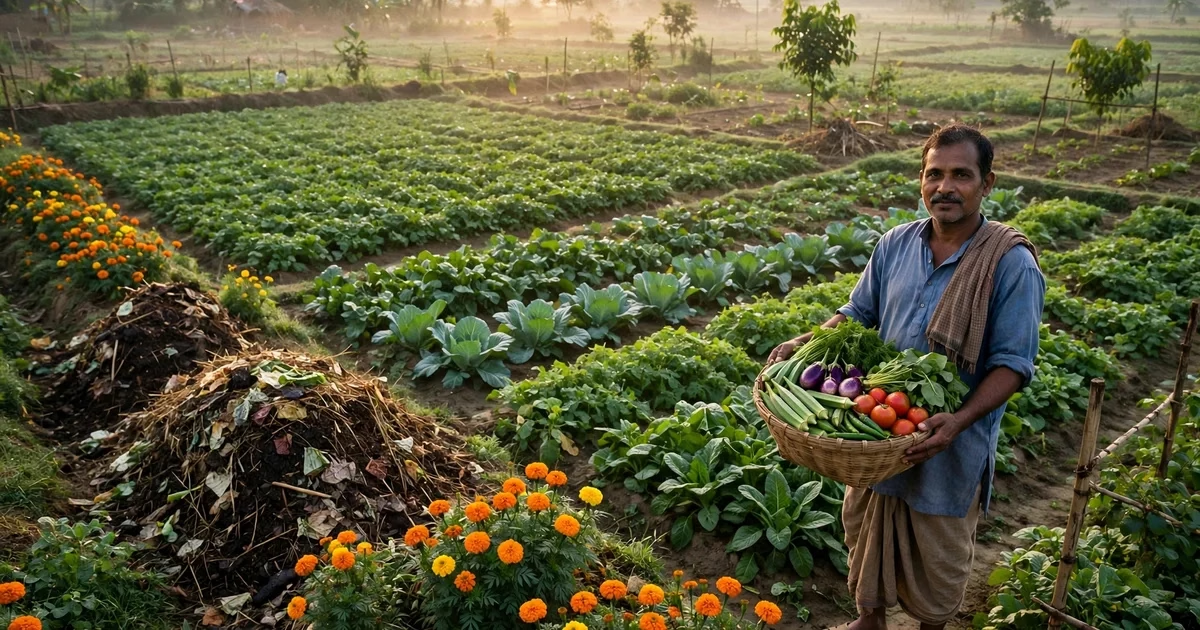
On an organic farm, the soil is treated as a living thing, not just dirt. The farmer adds compost from kitchen waste, leaves, and cow dung, which feeds tiny organisms in the soil that release nutrients slowly, so plants grow steadily. The farmer also rotates crops: one season may be pulses, which add nitrogen to the soil, and the next may be vegetables. Marigold flowers beside tomatoes keep pests away. When pests arrive, the farmer uses neem oil, garlic and chilli sprays, and traps, and protects helpful insects. Weeds are pulled by hand, which takes more labour and raises the cost.
Millets and Traditional Crops
Millets deserve a special place here. Jowar, bajra, ragi, and foxtail millet are some of the oldest grains grown in India, and they suit organic farming very well. They need less water than rice and wheat, grow in poor soil, and face fewer pests, so they need little or no spraying. The United Nations called 2023 the International Year of Millets, but Indian grandmothers cooked them for generations. Ragi is known for its calcium, bajra gives warmth in winter, and jowar makes soft rotis. Buying organic millets brings an old grain back to your plate, and that is one of the simplest organic food benefits to enjoy. Start with one millet meal a week.
Seasonal Eating: The Old Indian Way
Long before the word organic became popular, Indian families ate by the season: mangoes in summer, sarso ka saag in winter, and fresh peas when the cold arrived. A crop grown in its own season needs less help from chemicals and grows with better flavour. A tomato grown in season in your own state is likely to be fresher and cheaper than one grown out of season far away. Buy the vegetables that are plenty in the market this week, because plenty usually means local and in season. Your meals will stay fresh and varied, your bill will stay lower, and your food will travel a shorter distance.
Benefits of Organic Food
Here is one clear list of the good things organic food may offer. Some points are well supported, like lower pesticide residue on certified food. Others, like better nutrition, are still being studied, and results vary by crop, soil, and season. No single food can fix your health on its own, and organic food benefits work best with a balanced diet, good sleep, and regular movement.
Fewer Pesticide Residues on Your Plate
The strongest reason many families choose organic food is simple: fewer chemicals on what they eat every day. Conventional farming uses synthetic pesticides, and small amounts can remain on fruits and vegetables after harvest. Washing and peeling reduce them, but not everything. Certified organic food is grown without these synthetic sprays, so the residue on it is far lower. Food safety checks in India have found pesticide residues above safe limits in some conventional vegetables, especially leafy greens. Children and pregnant women gain the most from lower exposure, and this lower chemical load is one of the clearest organic food benefits.
Nutrition and Antioxidants
Does organic food have more nutrients than ordinary food? The answer is more mixed than shop labels suggest. Some studies have found higher levels of antioxidants, such as polyphenols, in organically grown fruits and vegetables. Plants not protected by chemical sprays produce more of their own defence compounds, and some of these are useful to us too. Organic fruits and leafy vegetables often contain good amounts of vitamin C, and carotenoids, which the body turns into vitamin A, are found in plenty in organic sweet peppers, tomatoes, and carrots. Still, the difference is not huge for every food: a fresh conventional tomato eaten the same day may give you more vitamin C than an organic tomato that travelled for a week. If you worry about a gap such as vitamin B12, a blood test and a doctor’s advice will help you far more than any food label.
Gut Health and Digestion
Your gut is home to trillions of tiny organisms that help digest food and support your immune system. Some chemicals used in conventional farming can disturb these organisms, and research on this is still growing. Organic food may support a calmer gut because it brings fewer of these compounds with it. Fermented foods like curd and kanji can also help. Many people who switch to organic food also eat more fibre without planning to, because they cook more vegetables, dal, and whole grains. A short daily fasting window and an early dinner help some people too, but lasting stomach trouble needs a doctor.
Immunity and Everyday Strength
Good immunity is built over months, not bought in one packet. A diet rich in vegetables, fruits, dal, curd, and whole grains gives your body what it needs to fight common infections, and this steady nourishment is one of the quiet organic food benefits families notice over time. Vitamin C from amla and lemon, zinc from pulses and seeds, and iron from leafy greens all play a part. Organic food alone will not stop colds and fevers. Sleep, clean water, and regular movement matter just as much. Many families also use simple home remedies like haldi doodh and ginger kadha when someone feels unwell. These are comfort foods, not treatments.
Skin and Hair
Your skin shows what you eat over time. Enough water, vegetables, fruits, and healthy fats support fresh looking skin, while too much fried food, sugar, and late meals often show up as dull skin and breakouts. Some people notice their skin feels calmer after they switch to organic food. Vitamin C and antioxidants help the skin repair itself, and healthy fats from nuts and seeds keep it soft. This link between food and skin is one of the organic food benefits young readers ask about most. Food cannot regrow hair lost to baldness. A hair transplant is a medical procedure with its own costs and risks. What food can do is support the hair you have: enough protein from dal, eggs, curd, and nuts, iron from leafy greens, and a calm routine that keeps stress management in mind.
Energy, Weight, and Daily Movement
Some people say they feel lighter and more energetic after switching to organic food. Part of this may be the food itself, but a bigger part is often the change in habits that comes with it. People who buy organic food tend to cook at home more and eat fewer packets of chips and biscuits. Those changes alone can improve energy and help with weight, so the energy lift is one of the organic food benefits that comes from the whole lifestyle, not from one packet. Regular fitness habits matter just as much. Organic food is not a weight loss food: organic ghee, sugar, and snacks still carry calories.
What to Buy Organic First
Most Indian families cannot switch everything to organic at once. Start with the foods you eat most often and the ones most likely to carry pesticide residue, and this is where organic food benefits are easiest to get for your money. Leafy greens come first, because palak, methi, and coriander are eaten in large amounts, lightly cooked, or raw as chutney. Tomatoes, apples, grapes, and capsicum are also worth buying organic when you can, because they are eaten with the skin on. Foods with a thick peel you throw away, like banana and orange, carry less risk, so you can save money there.

Staples come next. Rice, wheat atta, and dal are eaten every day in most homes, so even a small improvement adds up over a year, and the organic food benefits of clean daily staples are worth the small premium. Milk is another daily food worth thinking about: organic milk comes from animals given natural feed and kept without routine antibiotics. A glass of warm buffalo milk before bed is a common Indian habit, and a trusted source matters more than any label. A small piece of jaggery in tea is traditional, but it is still sugar, so keep the amount small. Make a simple priority list: leafy greens first, then daily staples, then milk and curd, then fruits your children eat daily.
Organic Food and Ayurveda
Ayurveda, the old Indian system of health, has always said food is medicine when it is fresh, seasonal, and suited to your body. Organic food fits this idea well, because it is grown close to nature and eaten close to the field, and the organic food benefits Ayurveda describes come from freshness and simplicity rather than from any label.
Sattvic Food and Seasonal Eating
Ayurveda describes sattvic food as fresh, light, and calming: fruits, vegetables, milk, ghee, nuts, dal, and whole grains, cooked simply and eaten with attention. Many people find sattvic eating helps them feel calmer and sleep better, and organic food fits this pattern easily. These calm, steady organic food benefits are the reason many families mix the two ideas without thinking about it. Ayurveda also teaches eating with the season: cooling foods like curd and cucumber in summer, warming foods like bajra, sesame, and ginger in winter. Try one habit this month: eat your biggest meal at midday and keep dinner light and early.
How to Identify Real Organic Food in India
This is the most useful skill in this whole guide, because the market is full of green packets that say organic without any proof. Checking a label turns all the organic food benefits in this article from a promise into something real. Real organic food in India carries one of a few official marks, and learning them takes only a minute.

The Marks to Look For
First, the Jaivik Bharat logo, the FSSAI mark for organic food. Second, look for the India Organic logo, which shows the product is certified under NPOP by APEDA. Third, look for the PGS-India mark, used by small farmer groups certified by the community. A genuine pack usually shows the FSSAI logo with a licence number, the certification mark, and the certifying body or farmer group name. The government has also introduced a unified India Organic logo, so you may see the old marks or the new one in shops. Both show the same standard, and both are real proof of the organic food benefits claimed on the pack. You can check a claim yourself on the Jaivik Bharat portal, and each PGS group has a unique ID you can look up.
Red Flags to Watch Out For
Be careful when a pack says organic but shows no certification mark, and when the price is far lower than other organic brands, because real certification costs money. Be careful with loose vegetables that claim to be organic but carry no farm name, group, or certificate. And be careful with words like natural, chemical free, farm fresh, and eco friendly. None of these is regulated in India, and none means organic. A green packet and a picture of a farm are marketing, not proof, and they do not deliver the organic food benefits you are paying for. A seller who is proud of his certificate will be happy to show it.
Organic Food on a Budget
Organic food usually costs more, and a full switch can feel out of reach for a middle class family. The good news is that you do not need a full switch to gain most of the organic food benefits. Buy seasonal vegetables, buy staples like rice, dal, and atta in bulk once a month, and cook at home more. Grow coriander, mint, and tomatoes in pots on a balcony, make your own curd and pickles, and buy from farmers markets where prices are often lower. Choose organic only for high priority foods, use cheap millets and pulses, plan meals so nothing is wasted, and share a bulk order with a neighbour. A simple home cooked meal of dal, rice, sabzi, and curd is already healthy, and the real organic food benefits come from the habit, not a perfect shopping list.
Common Myths About Organic Food
A few wrong ideas about organic food keep going around. The first myth is that organic food has no chemicals at all. Every food is made of chemicals, including water, and organic farming uses natural ones like neem oil and compost. The real claim is narrower: no synthetic pesticides and fertilisers. The second myth is that organic food is always more nutritious. The difference is real for some foods and small for others. The third myth is that organic food never goes bad. It can rot faster, because it carries no chemical preservatives. The fourth myth is that it is only for rich people. With seasonal buying and bulk staples, a middle class family can eat partly organic. The fifth myth is that washing does not matter. It always matters, and believing otherwise is one of the most common mistakes people make about organic food benefits.
A Simple 7 Day Plan to Start Eating Organic
If you are new to organic food, do not change everything on day one. Start slowly, one change at a time, and let the organic food benefits build up week by week.
- Day 1: check your kitchen. Read the labels on your rice, atta, dal, and oil packets, for the Jaivik Bharat or India Organic mark.
- Day 2: buy organic leafy greens and tomatoes for the week, and cook one simple meal with them, like palak dal and roti.
- Day 3: switch one staple to organic, such as the dal or atta your family eats daily, and buy a small pack first.
- Day 4: visit a farmers market or organic shop near your home, ask about certification, and buy one seasonal vegetable.
- Day 5: cook a millet meal, like ragi dosa or bajra khichdi, with curd and a seasonal sabzi.
- Day 6: plant one pot of coriander or mint on your balcony, and water it daily.
- Day 7: take a rest day with normal meals, decide which changes felt easy and worth keeping, and repeat them next week.
Frequently Asked Questions About Organic Food Benefits
Is organic food really better for health?
Certified organic food carries far less synthetic pesticide residue, and some organic fruits and vegetables contain higher levels of certain antioxidants, so the organic food benefits are real but modest. The overall gain depends on your whole diet, and a balanced home cooked diet matters more than any single packet.
Why is organic food more expensive in India?
Certification needs inspections and paperwork every year, organic farming needs more labour since weeds and pests are managed by hand, and yields are sometimes lower. Seasonal food, bulk staples, and farmers markets can bring the cost down.
How can I tell if food is really organic in India?
Look for the Jaivik Bharat logo from FSSAI, the India Organic mark under NPOP, or the PGS-India mark for small farmer groups. A genuine pack also shows an FSSAI licence number and the certifying body name. Words like natural and farm fresh prove nothing.
Should I buy everything organic?
No. Start with leafy greens, vegetables eaten with the skin, and staples like rice, atta, and dal. Buy conventional for thick skinned fruits like banana and orange. This gives you most of the value at a much lower cost.
Can organic food help with weight loss?
Organic food on its own does not cause weight loss, because organic ghee, sugar, and snacks still carry calories. It may help indirectly, because people who buy organic often cook at home more and eat less processed food, and that shift is one of the practical organic food benefits for weight control. Portion size, daily walking, and meal timings matter far more.
Final Words
Organic food is not a fashion, and it is not a fraud either. It is a way of growing food with fewer synthetic chemicals, healthier soil, and more care for the land, and the organic food benefits for an Indian family lie in fewer pesticide residues, fresher seasonal food, and a closer link with the farm that grew it. Start with leafy greens and one staple, learn the Jaivik Bharat and India Organic marks, and buy seasonal food. Small steps, kept for a year, will do more for your family than any big promise on a green packet.