

Dark spots can affect the appearance of the skin and often develop due to sun exposure, acne scars, aging, or hormonal changes. Many people search for simple home remedies before trying expensive cosmetic treatments, and lemon juice for dark spots is one of the most searched topics in India. Lemon has long been used in traditional skincare, because it is cheap and easy to find.
This guide explains how lemon juice may help with pigmentation, when it does not help, its benefits, its risks, and the safest home remedies for clearer-looking skin in India.
Read this first: lemon juice is acidic and strong. Never apply it undiluted, never use it every day, never put it on broken or freshly shaved skin, and never go out in the sun after using it. Always do a patch test first: apply a small amount on your inner forearm, wait 24 hours, and use it on your face only if there is no redness, itching, or burning. If you have sensitive skin, eczema, rosacea, or active acne, skip lemon juice and use the gentler alternatives in this guide instead. This article is for general information only and is not medical advice.
What Is Lemon Juice for Dark Spots?
Lemon juice for dark spots means using diluted lemon juice, usually mixed with honey, yogurt, or aloe vera, to reduce the appearance of dark spots and uneven skin tone. Lemon contains natural acids and vitamin C, which are often linked to skin-brightening effects.
Many people prefer these remedies because they are affordable and easy to make at home. A lemon costs only a few rupees at a kirana store. However, results vary by skin type and cause, and lemon juice is not a cure for every kind of dark spot.
If you are building a simple, natural routine, our guide to beauty tips for Indian skin covers cleansing, moisturising, and sun protection in the same style, and many of the ideas there are simple home remedies that Indian families have used for generations.
Understanding Dark Spots on the Skin
Dark spots, also known as hyperpigmentation, occur when certain areas of the skin produce excess melanin. Melanin is the pigment responsible for skin colour. When melanin collects in one place, that patch looks darker than the skin around it.
Sun damage, acne scars, hormonal changes, and aging can trigger dark spots. In India, the strong sun is the biggest trigger, and Indian skin naturally has higher melanin levels, so pigmentation shows up more easily and takes longer to fade.
Types of Dark Spots in India: How to Tell Them Apart
Most dark spots in India fall into four groups.
| Type | What it looks like | Common cause | Does lemon juice help? |
|---|---|---|---|
| Sun tan and sun spots | Brown patches on face, neck, arms, hands, darker after summer | Strong UV, outdoor work, two-wheeler travel, no sunscreen | May help slowly, only with daily sunscreen |
| Post-acne marks | Red or brown flat marks left where a pimple was | Picking pimples, acne, oily skin in humidity | May help mild marks over weeks, diluted and at night |
| Melasma | Grey-brown patches on cheeks, forehead, or upper lip, often both sides | Hormones, pregnancy, birth control pills, sun | Usually not, can make it worse; see a dermatologist |
| Age spots | Small dark brown spots on face and hands, after age 40 | Years of sun exposure adding up | May lighten very slowly; professional treatment works better |
Sun tan and sun spots are the most common type in India. Sunscreen matters more than any remedy here, because without it new spots keep forming while old ones fade. Post-acne marks are flat marks, not raised scars. The most important step is to stop picking pimples, because every squeezed pimple can leave a darker, longer-lasting mark.
Melasma usually appears as a larger, symmetrical patch, often on both cheeks or on the forehead and upper lip at the same time. It is common in Indian women, especially during pregnancy or while taking hormonal medicine. Lemon juice does not treat melasma, and irritation from lemon juice can trigger more pigmentation. If your patch looks like this, do not try lemon remedies. See a dermatologist first.
Age spots are small, round, dark brown spots that appear with age. They are harmless in most cases, but a spot that changes shape, colour, or size, or starts bleeding, is not an age spot to ignore. That needs a doctor, quickly.
Why Lemon Juice Is Popular for Skin Care
Lemon juice contains citric acid and vitamin C. These compounds are often associated with exfoliation and skin brightening, and that is why lemon juice has become a common ingredient in home remedies.
Citric acid is a mild exfoliant. It helps remove dead skin cells from the surface, which can make the skin look brighter and smoother. Vitamin C is an antioxidant. It may help reduce the oxidative stress that contributes to uneven skin tone, and it supports the skin in making collagen, the protein that keeps skin firm.
Many users believe lemon juice helps fade discoloration gradually when used carefully. However, dermatologists recommend caution, because raw lemon juice is far stronger than the vitamin C in a proper skincare product. A lemon is very acidic for skin, with a pH of around 2.
The Science Behind Lemon Juice and Pigmentation
Vitamin C is one of the most researched ingredients for skin brightening. It helps reduce oxidative damage and supports collagen production. In proper skincare products, vitamin C is used in a stable, measured form, at a known strength, mixed with other ingredients that keep it gentle.
Raw lemon juice is different. Its vitamin C content changes with the lemon, the season, and how fresh it is. You cannot measure the strength, and you cannot control how much citric acid you are putting on your skin. That is why two people can use the same lemon remedy and get very different results.
Citric acid helps remove dead skin cells, which may improve skin texture over time. But too much strips the skin barrier, the thin layer that protects your skin. Once it is damaged, the skin becomes dry and sensitive, and more likely to develop new dark spots. That is why lemon juice should never be used daily.
Benefits of Using Lemon Juice for Dark Spots
- Natural source of vitamin C
- Affordable and easily available, usually for Rs 5 to Rs 10 per lemon at a kirana store
- Supports exfoliation and removal of dull, dead skin
- May improve skin brightness over weeks of careful use
- Can be combined with honey, yogurt, and aloe vera
- Helps control oil on oily skin, when used in a diluted mask once or twice a week
However, results differ a lot. If a remedy causes redness, stinging, or peeling, it is not working for your skin. A good remedy should feel comfortable, not painful.
When Lemon Juice Helps, and When It Does Not
Lemon juice helps most with mild, surface-level pigmentation, and it helps least, or not at all, with deep or hormonal pigmentation.
| Situation | May help | Will not help |
|---|---|---|
| Light brown post-acne marks | Yes, slowly, diluted, at night, with sunscreen | No, if the marks are deep or still inflamed |
| Mild sun tan | Yes, with yogurt or honey, over 3 to 4 weeks | No, without daily sunscreen, the tan returns |
| Melasma | No | Needs a dermatologist, not a home remedy |
| Dark spots from a burn or injury | No | Needs time and a dermatologist; lemon can darken it |
| Changing moles or new dark patches | No | Needs a doctor urgently, do not cover it with remedies |
| Sensitive, dry, or eczema-prone skin | No, too irritating | Use aloe vera, yogurt, or a vitamin C serum instead |
If the patch is flat and brown and appeared after a pimple or a holiday in the sun, it is probably a mild mark. If it is grey-brown on both sides of the face and appeared during pregnancy or after starting hormonal medicine, it is probably melasma. If it is changing shape or colour, do not guess. See a dermatologist.
Lemon Juice and Honey Remedy

Honey is known for its moisturizing properties. Combining honey with lemon juice may reduce the drying effects of lemon, and it makes the mixture easier to apply in a thin, even layer.
How to make it: Mix one teaspoon of fresh lemon juice with one teaspoon of honey. Apply the mixture only to the dark spots, not to your whole face, using a clean cotton bud. Leave it for ten minutes, no longer. Wash with lukewarm water afterward, and apply a light moisturiser.
How often: Two times a week, at night, for three to four weeks. Then stop for a week and check your skin in daylight. If there is no change after six weeks, this remedy is not the right one for your spots. Who should skip it: people with sensitive skin, active acne, open pimples, or a history of irritation from citrus. Honey does not make lemon juice safe for sensitive skin. It only makes it slightly gentler.
Lemon Juice and Aloe Vera Treatment
Aloe vera is widely used for soothing irritated skin. It may complement lemon juice by providing hydration and calming effects, and it is one of the gentlest partners for lemon juice.
How to make it: Mix one tablespoon of fresh aloe vera gel with three to four drops of lemon juice, not a full teaspoon. Apply it to the affected areas and leave it for fifteen minutes. Rinse thoroughly afterward with cool water.
This is the best lemon remedy for people who want to try lemon juice but worry about dryness. Even so, do a patch test first, use it only at night, and use sunscreen the next morning.
Lemon Juice and Yogurt Face Mask

Yogurt contains lactic acid, which supports gentle exfoliation. Together with lemon juice, it may help improve skin appearance, and the yogurt base makes the mixture much gentler than lemon juice on its own.
How to make it: Mix one tablespoon of plain yogurt, also called dahi, with half a teaspoon of lemon juice. Apply evenly to the skin, avoiding the area around the eyes. Leave it on for fifteen minutes before washing with cool water. Use it two times a week at night. Do not use flavoured or sweetened yogurt. Plain, fresh curd is best.
For more ideas in the same style, read our guide to skin care in Hindi and our natural glowing skin tips, which cover simple daily habits for Indian skin in easy language.
Lemon Juice and Turmeric Combination
Turmeric has been used in Indian skincare traditions for centuries. It is known for its antioxidant and soothing properties, and it is the most familiar ingredient in Indian home remedies.
How to make it: Combine a small pinch of turmeric with a few drops of lemon juice and one teaspoon of yogurt or rose water. Create a paste and apply it directly to dark spots. Wash after ten minutes with lukewarm water. Use wild turmeric, also called kasturi manjal, if you can find it, because it is gentler than kitchen turmeric and stains the skin less. Do not use turmeric every day.
Safer Alternatives for Sensitive Skin
If lemon juice irritates your skin, you do not have to give up on fading dark spots. These alternatives are gentler, and for sensitive skin they often work better than lemon juice.
- Plain yogurt mask: Apply plain dahi for 15 minutes, two times a week.
- Aloe vera gel: Apply fresh aloe vera gel every night. It soothes and hydrates.
- Potato juice: Apply chilled potato juice on dark spots for 15 minutes. It is very mild.
- Vitamin C serum: A store-bought serum, usually 10 to 15 percent, is safer than raw lemon juice. It costs more, usually Rs 300 to Rs 800.
Importance of Patch Testing
Not every skin type reacts positively to lemon juice. Some people may experience redness, itching, or irritation, even if they have used lemon in food all their life. A food that is safe to eat is not always safe to put on your face.
Therefore, a patch test is essential. Apply a small amount of the diluted mixture to the inner arm, not the face, and wait 24 hours. Check the spot in daylight. If there is no redness, itching, swelling, or burning, you can try it on a small dark spot on the face. If irritation occurs, even a little, avoid using lemon-based remedies. Wash the area with cool water and apply plain aloe vera gel.
Skin Care Tips While Using Lemon Remedies
Using lemon juice alone is not enough. A complete skincare routine supports better results, and without it, even a good remedy will fail.
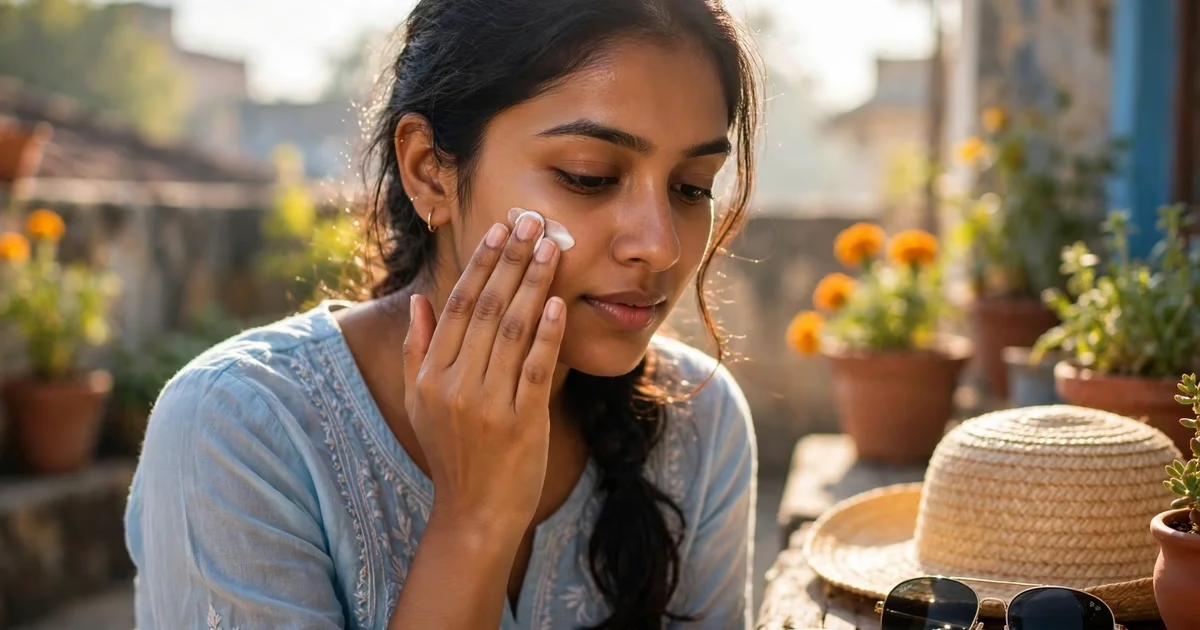
Use sunscreen daily. This is the most important tip in the whole guide. Without sunscreen, lemon juice can make dark spots darker, not lighter. Apply a broad-spectrum sunscreen every morning, even if you stay indoors, because UV comes through windows. In India, SPF 30 is enough for daily use in the city. For long outdoor work, travel, or beach days, use SPF 50 and reapply every two to three hours. Apply a full finger-length of sunscreen for your face and neck, not a pea-sized dot.
Stay hydrated and eat for your skin. Drink 8 to 10 glasses of water a day. A healthy life shows on your skin. If you drink milk, buffalo milk is richer in fat and protein than cow milk, so use a small portion if your skin is acne-prone. Replace refined sugar with a small amount of jaggery in moderation, and keep dinner light and early. A simple Ayurvedic dinner with khichdi, soup, or steamed vegetables helps digestion and sleep.
- Avoid excessive sun exposure, especially between 11 am and 3 pm. Wear a hat, sunglasses, and full sleeves outdoors.
- Cleanse gently, once or twice a day, with a mild face wash. Do not scrub hard.
- Avoid overusing acidic treatments. Lemon juice, vinegar, and strong scrubs should never be used on the same day.
- Do not pick pimples. Every picked pimple can leave a dark mark that lasts for months.
- Regular exercise, such as a brisk 30-minute walk five days a week, improves blood flow and helps your skin heal faster.
Risks and Precautions of Lemon Juice
Despite its popularity, lemon juice has risks. It can increase skin sensitivity to sunlight, and this is the biggest risk of all. In plain words, lemon juice plus sunlight can burn the skin. Doctors call it phytophotodermatitis, which means a plant chemical reacting with sunlight on the skin. It can cause redness, blisters, and dark patches worse than the original spots.
That is why lemon juice must only be used at night, in a diluted form, and washed off fully before morning. Never apply lemon juice in the morning and go out. Never apply it before a walk, a bike ride, or a day at the beach. Even a short time in strong Indian sun after lemon juice can cause a reaction.
Stop at once and wash with cool water if you notice: burning that does not fade in a few minutes, redness that spreads, swelling, blisters, peeling, or darkening of the spot after use. Apply plain aloe vera gel, avoid all active products for a few days, and use sunscreen if you must go out. People with eczema, rosacea, or a history of allergies to citrus should not try lemon juice at all.
Can Lemon Juice Permanently Remove Dark Spots?
Lemon juice is not a guaranteed permanent solution. Results depend on the cause and severity of pigmentation, and on whether you protect your skin from the sun while you use it.
Mild post-acne marks may improve over time with consistent care. However, deeper pigmentation often requires professional treatments such as chemical peels, laser therapy, or dermatologist-approved creams. A home remedy can fade the surface, but it cannot reach deep pigmentation, and it cannot change hormones.
Realistic Timeline
| Time | What you may see | What to do |
|---|---|---|
| Week 1 | Brighter, smoother skin; dark spots mostly unchanged | Patch test, use twice a week at night, start daily sunscreen |
| Week 2 to 3 | Mild post-acne marks may look slightly lighter | Continue twice a week, do not increase the dose |
| Week 4 to 6 | Light brown marks may fade by a small amount | Check in daylight, take a photo in the same light |
| Week 8 | If there is no change at all, stop lemon juice | Try a gentler remedy or see a dermatologist |
Take a photo of the spot in the same daylight once a week. If the spot is getting darker, redder, or bigger, stop the remedy at once.
When to See a Dermatologist
Home remedies have a limit. See a dermatologist if any of these apply to you:
- Your dark patches are melasma, or they appeared during pregnancy or after starting hormonal medicine
- A dark spot is changing shape, colour, or size, or it has started bleeding, itching, or crusting
- You have a new dark patch that appeared suddenly, without a clear cause
- Your pigmentation has not improved at all after 8 weeks of careful home care
- Lemon juice or any remedy caused burning, blistering, or darkening
A dermatologist can tell you which type of pigmentation you have in one visit, and that answer saves you months of guessing. In India, a first consultation usually costs Rs 500 to Rs 1,500, depending on the city and the clinic.
FAQs: Lemon Juice for Dark Spots
1. Is lemon juice for dark spots safe?
It can be safe when used carefully, diluted, twice a week, at night, and only after a patch test. Never use it undiluted, daily, or before going out in the sun.
2. How long does it take to see results?
Visible improvement may take three to six weeks for mild post-acne marks. If there is no change after eight weeks, stop and see a dermatologist.
3. Can I apply lemon juice directly on my face every day?
No. Daily use strips the skin barrier and can make dark spots worse. Use a diluted mixture two times a week at night, for ten to fifteen minutes only.
4. Can I go out in the sun after applying lemon juice?
No. Lemon juice makes the skin very sensitive to sunlight and can cause burns and darker patches. Use it only at night and apply SPF 30 or SPF 50 sunscreen the next morning.
5. Who can benefit from lemon juice for dark spots?
People with mild pigmentation, light post-acne marks, or mild sun tan, and with normal to oily skin, may find these remedies useful. People with sensitive skin, melasma, eczema, or active acne should skip lemon juice.
6. What is the safest alternative to lemon juice?
For sensitive skin, plain yogurt, aloe vera gel, or a vitamin C serum is safer. Sunscreen, used daily, is the safest and most effective step of all.
Conclusion
Lemon juice for dark spots is popular for a good reason. It is cheap, natural, and easy to try at home, and it may help brighten mild pigmentation when used carefully. However, it can irritate sensitive skin and increase sun sensitivity, and it can make some kinds of pigmentation worse.
The safest way to use it is simple: dilute it, use it twice a week at night, leave it on for ten to fifteen minutes, and protect your skin with sunscreen every morning. For sensitive skin, skipping lemon juice and using yogurt, aloe vera, or a vitamin C serum is the better choice.
Disclaimer: This article is for general information only and is not medical advice. Lemon juice can cause irritation, burns, and increased sun sensitivity. Always do a patch test and wait 24 hours before use. Never apply lemon juice undiluted, daily, on broken skin, or before sun exposure. Stop at once if you notice burning, redness, swelling, blistering, or darkening. If you have persistent pigmentation, melasma, a changing mole, or a rash that does not heal, please see a dermatologist.


2 thoughts on “Wellhealthorganic.com:Lemon-juice-know-home-remedies-easily-remove-dark-spots: Natural Ways to Reduce Dark Spots with Lemon Juice”