
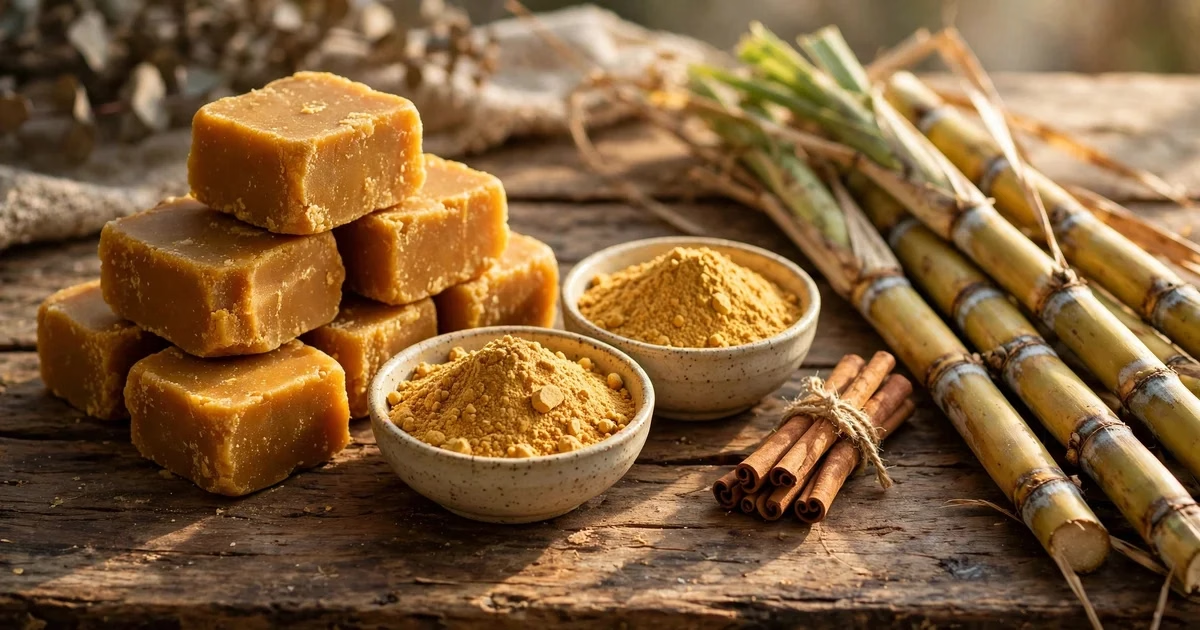
Jaggery, known as gur in Hindi, is one of India’s oldest and most loved natural sweeteners. Made from sugarcane juice or palm sap with no chemical processing, jaggery keeps iron, magnesium, potassium, antioxidants, and digestive enzymes that refined white sugar loses completely. That is why jaggery health benefits have become such a widely searched topic across India.
Whether you want better digestion, stronger immunity, glowing skin, or steady energy, jaggery can help, when it is eaten in the right amount. This complete guide covers everything you need to know about jaggery health benefits, including its nutrition profile, the top 12 benefits, Ayurvedic uses, jaggery vs sugar, and the right way to use it every day.
Please read first: This article is for general information only and is not medical advice. Jaggery is still a form of sugar, so people with diabetes, or anyone with a medical condition, should talk to a doctor before eating it regularly. The information here describes traditional food use, not treatment for any disease.
What Is Jaggery? A Quick Overview
Jaggery is an unrefined natural sweetener made by boiling raw sugarcane juice or palm sap until it thickens and solidifies into blocks or powder. Unlike white sugar, which is bleached and stripped of nutrients during factory processing, jaggery goes through no chemical treatment.
That is why jaggery is more than a sweetener. It is a traditional food with real nutrients, and the jaggery health benefits in this guide come from those nutrients and from centuries of use in Indian homes, where jaggery has always had a place beyond the kitchen, in home remedies for cough, digestion, and low energy.
In India, jaggery is called by many names:
| Language | Name for Jaggery |
|---|---|
| Hindi | Gur / Gud |
| Tamil | Vellam |
| Telugu | Bellam |
| Kannada | Bela |
| Marathi | Gul |
| Gujarati | Gol |
| Malayalam | Sharkara |
Jaggery comes in three main types: sugarcane jaggery, the most common type across India; date palm jaggery, known as nolen gur and loved in Bengal during winter; and coconut palm jaggery, popular in South India. Each type has its own flavour and a slightly different nutrient profile, but all three share the same basic benefits.
Nutritional Profile of Jaggery (Per 100g)
The numbers explain why jaggery health benefits are taken seriously. The table below shows the nutrients in 100 grams of jaggery.
| Nutrient | Amount |
|---|---|
| Calories | 383 kcal |
| Carbohydrates | 98g |
| Sugar (Sucrose) | 97g |
| Iron | 11 mg |
| Magnesium | 70-90 mg |
| Potassium | 1050 mg |
| Calcium | 40-100 mg |
| Phosphorus | 40 mg |
| Zinc | 0.2 mg |
| Selenium | Trace amounts |
| Vitamin B1, B2, B3 | Present |
| Antioxidants (Phenolics) | Present |
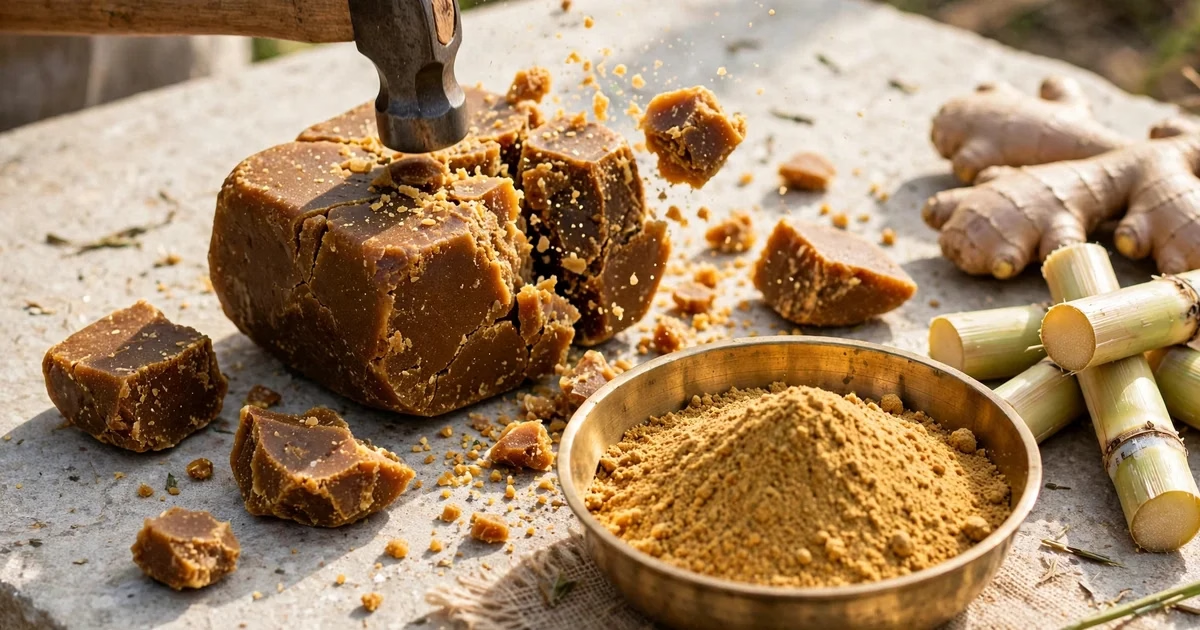
One serving of just 10 to 15 grams daily is enough to get these benefits without eating too much sugar. That is about one small piece after a meal, not a full bowl. The rest of this guide explains what each of these nutrients actually does in the body.
Top 12 Incredible Health Benefits of Jaggery
Here is the complete breakdown of why jaggery deserves a place in your daily diet, not as a trend, but as a practical health habit. Each of the jaggery health benefits below comes from the nutrients in jaggery and the way it has been used in Indian homes for centuries.
1. Prevents and Treats Iron Deficiency Anemia
Iron deficiency is common in India, and low iron is one of the main causes of tiredness, weakness, and pale skin, especially in women, children, and teenagers. Jaggery contains about 11 mg of iron per 100 grams, far more than any other sweetener, because refined sugar contains no iron at all. Eating a small piece of jaggery every day adds a steady supply of iron to the diet, which helps the body make haemoglobin, the part of blood that carries oxygen. Over weeks, this can reduce fatigue and weakness in people with low iron. That is why iron is the first of the jaggery health benefits most Indian families notice. Pro tip: eat jaggery with amla or any vitamin C rich food, because vitamin C helps the body absorb iron better. A glass of lemon juice with your meal works the same way.
2. Powerfully Boosts Digestion
Jaggery activates digestive enzymes in the stomach, stimulates bile production in the liver, acts as a natural laxative that prevents constipation, reduces bloating, acidity, and indigestion, and supports the growth of healthy gut bacteria. This is why eating a small piece of jaggery after meals has been a traditional Indian practice for centuries. In Ayurveda, jaggery is said to strengthen agni, the digestive fire, and a strong digestion helps the body absorb nutrients from the rest of the meal too. People who feel heavy or bloated after eating often find that a small piece of gur after lunch or dinner brings quick relief. If stomach trouble keeps coming back, frequent digestive problems may need a doctor’s care, not just home remedies.
3. Detoxifies the Liver and Purifies Blood
Jaggery supports the liver, the organ that filters the blood, and helps the body clear out waste. Its fibre and antioxidants support the liver’s natural cleaning work, which is especially useful for people who live in polluted cities or eat a lot of processed food. In traditional practice, jaggery is also eaten by people who work in dusty places, because it is believed to help clear dust and unwanted particles from the digestive system. Think of it as gentle daily support for the liver, not a fast detox or a cure.
4. Provides Sustained, Crash-Free Energy
White sugar gives a quick spike in blood sugar followed by a crash, which leaves you tired, hungry, and craving more sugar. Jaggery releases its energy more slowly, because it is eaten with minerals and fibre that slow digestion, and because people usually eat it in smaller amounts with food rather than alone. This makes jaggery a better choice for students, athletes, and working professionals who need steady energy through the day. Steady energy is one of the jaggery health benefits people feel first, because the afternoon crash disappears. One important correction: jaggery is still a sugar, and its main component is sucrose, so it is not a free food for people with diabetes. The advantage is real, but it is modest.
5. Boosts Immunity Naturally
Jaggery contains antioxidants including flavonoids, phenolic acids, and selenium. These compounds neutralise free radicals that damage cells, support the immune system against infections, and reduce oxidative stress and inflammation in the body. Regular, moderate use of jaggery supports long term immunity, something no refined sugar product can claim. Of all the jaggery health benefits, immunity is the slowest to show, because it builds over weeks of regular use. During seasonal change, when colds and coughs spread easily, a warm drink with jaggery, ginger, and tulsi is a common home remedy in Indian families.
6. Improves Respiratory Health
Jaggery has natural anti allergic and expectorant properties, which means it helps clear mucus from the airways. It soothes the throat and supports recovery from cough, cold, asthma, and bronchitis, especially during winter. Best home remedy: mix jaggery with ginger, black pepper, and tulsi to make a warm decoction, and sip it slowly. This is one of the most trusted home remedies for winter cough in Indian households, and it works best when taken at the first sign of a cold.
7. Regulates Blood Pressure
Jaggery contains potassium, about 1050 mg per 100 grams, along with a small amount of sodium. These two minerals work together to maintain fluid balance in the body. Potassium also helps relax blood vessels, which reduces strain on the heart. This does not mean jaggery treats high blood pressure, and people with blood pressure problems should follow their doctor’s advice. Blood pressure support is one of the quieter jaggery health benefits, and it works only as part of an overall healthy diet. But as a food choice, jaggery is clearly better than refined sugar, which adds calories with no minerals at all.
8. Relieves Joint Pain and Strengthens Bones
In India, jaggery with ginger is a well known winter remedy for joint pain and stiffness, and jaggery with sesame seeds is eaten for stronger bones. Sesame seeds add calcium and magnesium, and jaggery adds iron and warmth, which Ayurveda describes as ushna, or warming, energy. Eating jaggery with sesame seeds, known as tilgul, is a traditional winter food in Maharashtra and across India, shared during Makar Sankranti. For bone health, the calcium in jaggery itself is modest, about 40 to 100 mg per 100 grams, so sesame seeds, dairy, and leafy greens matter more. Jaggery is a supporter, not the main source.
9. Supports Weight Management
This may seem surprising, but in moderate amounts jaggery can support weight management. Potassium reduces water retention and bloating, it boosts metabolism when paired with warm water or ginger, the fibre content promotes fullness and reduces unnecessary snacking, and it satisfies sweet cravings without triggering the binge cycle of refined sugar. The key word is moderate. Weight management is one of the most misunderstood jaggery health benefits, because it works only when the amount stays small. Jaggery has about 383 calories per 100 grams, so eating large amounts will cause weight gain. A small piece of 10 grams after a meal is about 38 calories, which fits easily into a balanced diet.
10. Promotes Healthy, Glowing Skin
The antioxidants in jaggery, particularly selenium and phenolic compounds, protect skin cells from free radical damage and early ageing. Regular use helps clear acne and pimples from within, even out skin tone, maintain skin elasticity, and purify the blood, which shows directly in skin health. Skin is often where jaggery health benefits show first, because better blood and digestion reflect in the skin. DIY beauty tip: a face scrub made from jaggery, turmeric, and milk acts as a natural exfoliator and brightener. Use it once a week on clean skin, and rinse with lukewarm water. For more natural skin care ideas, read our beauty tips and natural glowing skin tips guides. Readers who prefer Hindi can find the same natural skin care ideas in our skin care in Hindi guide.
11. Provides Relief from PMS and Menstrual Cramps
Jaggery triggers the release of endorphins, the body’s natural feel good hormones, which can reduce mood swings, irritability, and emotional discomfort during PMS. The iron in jaggery also helps replace the blood lost during menstruation, which reduces weakness and fatigue. A warm drink of jaggery and ginger, or a small piece of jaggery with sesame seeds, is a common home remedy for cramps in Indian households. It is gentle support, not a replacement for medical care, and severe cramps should always be checked by a doctor.
12. Supports Brain and Nervous System Health
Jaggery contains B vitamins including B1 (thiamine), B2 (riboflavin), and B3 (niacin), which support healthy nerve function, brain activity, and energy production at the cellular level. These vitamins are present in small amounts, so jaggery is not a vitamin supplement, but as part of a varied diet it contributes to the daily intake. Combined with steady energy and better sleep, this supports focus and mood through the day. Low iron also affects the brain and hair together, and iron deficiency is one of the causes of white hair in young adults, which is why the same foods help both.
Jaggery vs. White Sugar: A Clear Comparison
This comparison explains why jaggery health benefits have caught the attention of so many health conscious Indians.
| Feature | Jaggery (Gur) | White Sugar |
|---|---|---|
| Processing | Minimal, no chemicals | Heavily refined and bleached |
| Nutrients | Iron, Mg, K, Ca, Vitamins | Zero |
| Antioxidants | Present (phenolics, flavonoids) | Absent |
| Glycemic Index | Around 84 (moderate) | Around 100 (very high) |
| Energy Release | Slow and sustained | Fast spike then crash |
| Digestive benefit | Yes | No |
| Detox properties | Yes | No |
| Best for | Daily health use | None |
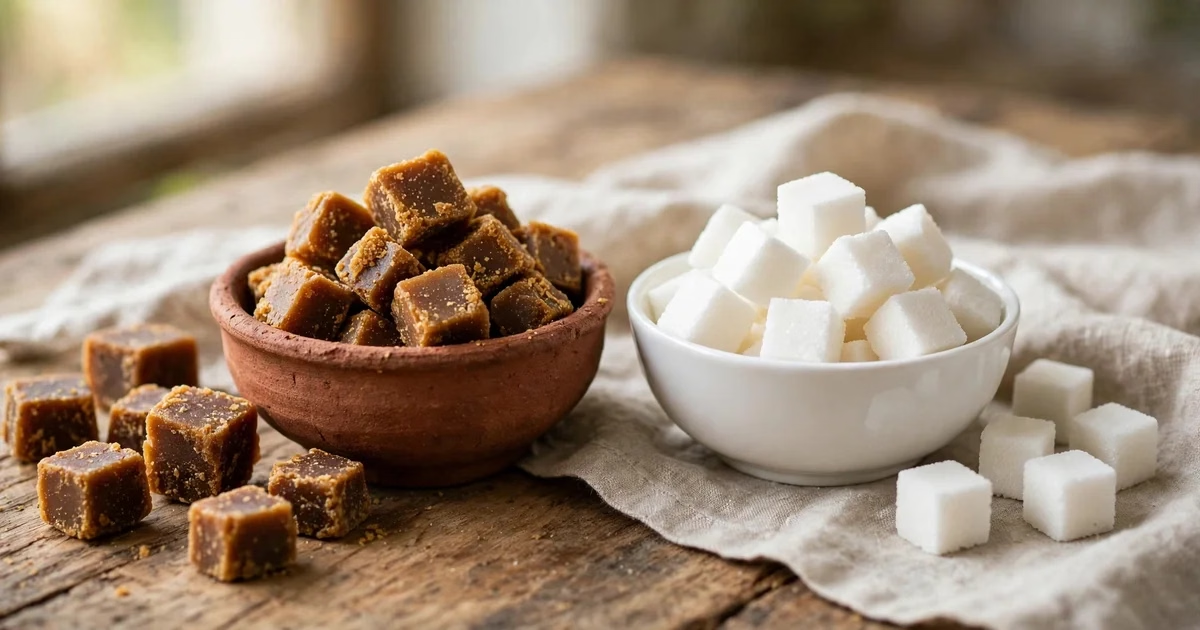
The difference is clear, but it is important to stay honest about it. Jaggery is better than white sugar, but it is still sugar. Its glycemic index of around 84 is lower than white sugar, yet still high, so people with diabetes must treat jaggery with the same care as sugar. The real benefit is that jaggery replaces an empty calorie food with one that carries minerals, and it is usually eaten in smaller amounts.
Ayurvedic Perspective on Jaggery
In Ayurveda, jaggery is described as having ushna, or warming, properties. It generates heat and energy in the body, which makes it especially valuable in the winter months. Ayurvedic texts recommend jaggery for balancing vata and kapha doshas, strengthening agni (digestive fire), purifying rakta (blood), and supporting ojas (vital life energy). The combination of jaggery and ghee after meals is a classic Ayurvedic digestive remedy. Jaggery and sesame seeds are recommended for bone health, and jaggery and ginger are the go to remedy for cold and cough in Indian households. Ayurveda recognised these jaggery health benefits long before modern nutrition explained them, which is why jaggery has stayed in Indian kitchens for centuries. Readers who want to explore this tradition further can read our Ayurveda guide to the best dinner foods for staying fit.
How to Use Jaggery Daily, Practical Ways

Adding jaggery to your routine is easy, and you do not need any special preparation to enjoy the jaggery health benefits above:
- Replace sugar in chai or coffee with a small piece of jaggery for a richer, healthier taste.
- Eat 10g after lunch to improve digestion and prevent the afternoon energy crash.
- Make jaggery water: dissolve a small piece in warm water with lemon for a morning drink.
- Use in kheer, halwa, or laddoos instead of refined sugar.
- Add to oatmeal or poha as a natural sweetener at breakfast.
- Mix with peanuts or sesame seeds for a nutritious winter snack, tilgul or chikki.
- A glass of warm buffalo milk with a small piece of jaggery at bedtime supports deep sleep and muscle recovery.
Start with one use a day, and keep the amount small. Ten to fifteen grams is enough. If you also eat sweets, biscuits, or sweetened drinks, jaggery should replace some of that sugar, not add to it.
How to Choose the Best Quality Jaggery
Not all jaggery in the market is pure. Here is what to check before buying:
- Choose dark brown or golden brown jaggery. Lighter coloured jaggery may contain chemicals.
- Avoid overly shiny jaggery, because it likely has added chemical agents.
- Taste it. Pure jaggery is slightly salty sweet, not just sweet.
- Buy organic certified jaggery to avoid pesticide residue from sugarcane.
- Store in an airtight glass jar away from moisture and direct sunlight. Shelf life is up to 12 months.
Good jaggery costs a little more than the cheapest blocks in the market, but the difference in purity is worth it. Buy from a trusted shop, and prefer organic certified jaggery when it is available.
Final Thoughts
Jaggery is one of the simplest food swaps an Indian family can make. It costs little, it is available everywhere, and it replaces an empty calorie food with one that carries iron, potassium, magnesium, and antioxidants. Digestion improves, energy becomes steadier, and sweet cravings reduce, all from a small piece after meals. That said, jaggery is still sugar, and the jaggery health benefits in this guide all depend on one thing: the amount. Ten to fifteen grams a day is a health habit. A hundred grams a day is just sugar. Keep the amount small, choose pure jaggery, and let this one small change support the rest of your healthy routine. For more simple daily habits, read our healthy life guide and our fitness guide for routines that work at home.
Frequently Asked Questions (FAQs)
Q1: Is it safe to eat jaggery every day?
Yes, for most healthy adults. Eating 10 to 15 grams of pure jaggery daily is safe and beneficial, and that small daily amount is enough to enjoy the jaggery health benefits without eating too much sugar. People with diabetes should consult their doctor first, because jaggery still raises blood sugar.
Q2: Can diabetics eat jaggery?
Only in very small amounts, and only after consulting a doctor. Jaggery has a glycemic index of around 84, which is lower than white sugar but still high. It is not a safe sugar for diabetes, whatever some sellers claim.
Q3: What is the best time to eat jaggery?
The best time to eat jaggery is after lunch or dinner. Eating it after meals aids digestion by activating digestive enzymes and preventing acidity. A small piece with warm milk at bedtime also supports sleep.
Q4: Does jaggery help with weight loss?
In moderation, it can help, because potassium reduces water retention, it boosts metabolism when paired with warm water or ginger, and it prevents overeating by satisfying sweet cravings. But overeating jaggery will cause weight gain, because it is still high in calories.
Q5: Which is better, jaggery powder or solid jaggery block?
Both are equally nutritious if they are pure and organic. Jaggery powder is more convenient for cooking and tea, while solid blocks are better for traditional recipes. Check purity either way.
Q6: Does jaggery improve skin health?
Yes. The antioxidants, selenium and phenolic compounds, in jaggery fight free radicals, reduce oxidative stress, and purify the blood, all of which show as healthier, glowing skin. Eating jaggery helps from within, and a jaggery face scrub can help from outside.
Q7: How is jaggery different from brown sugar?
Brown sugar is white sugar with a little molasses added back for colour and flavour. It has almost no minerals. Jaggery is unrefined sugarcane juice, so it keeps iron, potassium, magnesium, and antioxidants. That is the real difference between them.
Q8: Can children eat jaggery?
Yes, in small amounts. Jaggery is a better sweetener than white sugar for children, and it adds iron to their diet. Keep the amount small, and take care of dental health by brushing after sweets.
Conclusion
Jaggery health benefits are real, but they depend on how you use it. A small piece after meals supports digestion, iron levels, immunity, and steady energy, while a large amount is simply extra sugar. Choose pure, dark brown jaggery, keep the portion to 10 to 15 grams a day, and pair it with a balanced diet and an active routine. That is how a traditional Indian sweetener earns its place in a modern healthy kitchen.
Disclaimer: This article is for general information only and is not medical advice. Jaggery is a form of sugar, so people with diabetes, or anyone with a medical condition, should consult a doctor before eating it regularly. Home remedies and food changes support health, but they are not treatments for any disease.


One thought on “Wellhealthorganic.com: Jaggery With Incredible Health Benefits You Must Know in 2026”