
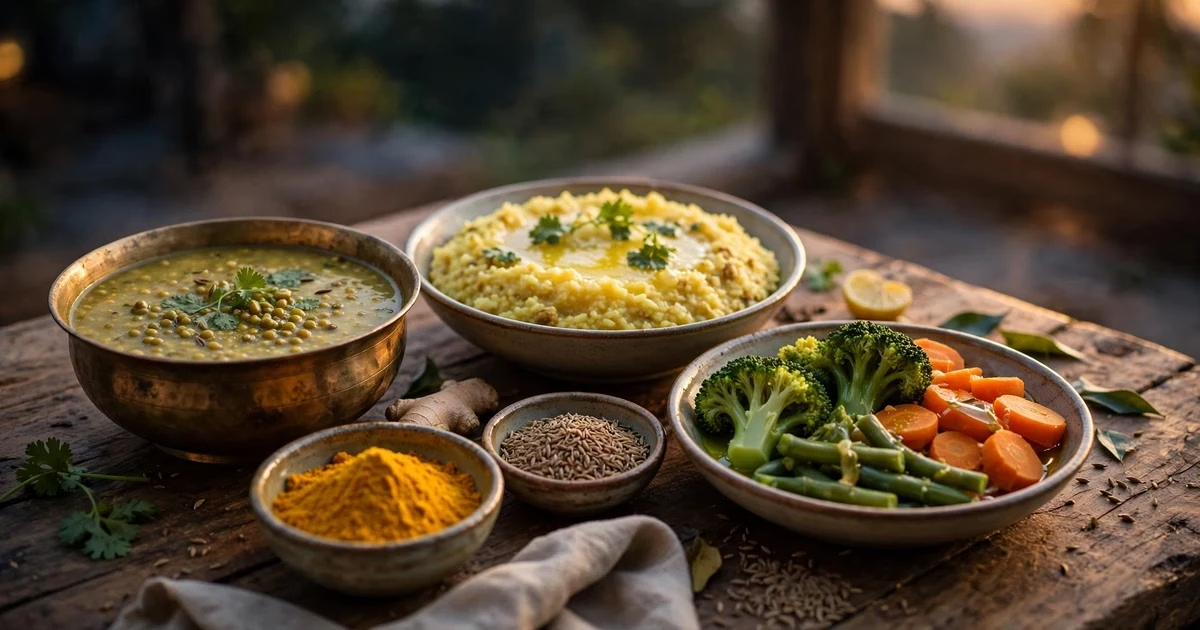
Ayurveda is a 5,000-year-old natural healing system from India that treats food as medicine, and nowhere is that idea more important than at dinner. According to Ayurvedic teaching, whatever you eat in the evening directly influences your weight, your sleep, your digestive fire, known as Agni, and even how your body rests and repairs itself overnight. That is why ayurvedic dinner foods matter so much for anyone who wants to stay fit without following a complicated diet.
This guide covers the best ayurvedic dinner foods, dosha-based meal planning, the foods to avoid at night, and the simple eating rules that help you sleep better and wake up feeling light. Everything here uses ingredients already common in Indian kitchens.
Please read first: This article is for general information only and is not medical advice. Ayurvedic food guidance describes traditional practice, not treatment for any disease. If you have diabetes, a digestive disorder, or any medical condition, please talk to a doctor before changing your diet.
Why Dinner Is the Most Important Meal in Ayurveda
Most people believe that breakfast is the most important meal of the day. Ayurveda disagrees: dinner is where most health problems begin or end, because the evening is when the body slows down and prepares for rest. A light, warm, well-timed dinner supports that process, while a heavy, late, or cold dinner works against it.
Here is why your dinner choices matter so much:
Agni, your digestive fire, is at its weakest at night. Ayurveda teaches that digestion is strongest around midday and weakest after sunset. Heavy food eaten late sits in the stomach, disturbs sleep, and leaves you feeling heavy in the morning. Light ayurvedic dinner foods, such as soups and dal, suit this weaker evening digestion.
Evening hours are dominated by Kapha dosha. The wrong foods add to Kapha, which Ayurveda describes as slow, heavy, cold, and oily by nature. When Kapha rises at night, it can lead to weight gain, morning congestion, and sluggishness. The right foods balance Kapha and help you wake up feeling clear and light.
Undigested food creates Ama, or toxins, overnight. In Ayurvedic teaching, food that is not properly digested ferments in the gut and forms Ama, a sticky residue described as a root cause of many health problems. Eating light and early is one of the simplest ways to reduce Ama.
Dinner is directly linked to sleep quality. A heavy or late evening meal interferes with your sleep pattern and leaves you tired in the morning, even after a full night in bed. A light plate of ayurvedic dinner foods, eaten at least two hours before sleep, helps the body settle into deep, restful sleep.
What Is Kapha Dosha and Why Does It Need to Be Balanced at Night?
Ayurveda teaches that the body is governed by three doshas, or energies: Vata, Pitta, and Kapha. Vata is linked to movement and the nervous system, Pitta to heat and digestion, and Kapha to structure and moisture, connected with the elements of earth and water.
Kapha dosha is dominant in the evening, roughly from 6 PM to 10 PM. Its nature is slow, heavy, cold, and oily. When you eat foods at night that increase Kapha, such as curd, fried food, ice cream, or heavy dairy, the body feels the effect by morning. When you eat foods that balance Kapha, such as warm soups, light grains, and cooked vegetables, you sleep well and wake up feeling light.
Signs that Kapha may be out of balance because of an improper evening meal include:
- Unexplained weight gain, especially around the waist
- Morning congestion and excess mucus
- Slow digestion and constipation
- Feeling exhausted even after enough sleep
- Skin breakouts and allergies
- Sour burping or acid reflux after dinner
These signs do not diagnose any disease, but in Ayurvedic practice they are read as signals that the evening meal needs attention. The fix is simple: eat lighter, eat warmer, and eat earlier. The ayurvedic dinner foods in the next section are chosen exactly for this purpose, and many of them also appear in traditional Indian home remedies for digestion and sleep.
Best Dinner Foods Recommended by Ayurveda
These are the top ayurvedic dinner foods for fitness, deep sleep, and clean digestion. Each one is light, warm, easy to digest, and easy to find in India. You do not need all seven every night; pick two or three and rotate them through the week.
1. Mung Dal (Split Green Lentils)
Mung dal is the most recommended of all ayurvedic dinner foods. It is one of the most easily digested forms of protein, it does not create Ama when cooked well, and it is considered suitable for all three doshas. Serve it as a thin, hot soup with a pinch of turmeric and cumin, or as a plain dal with a small amount of rice. For people who feel heavy after eating other dals at night, such as urad or chana dal, mung dal is usually the gentlest option. Soak it for 30 minutes before cooking, and cook it until it is completely soft, since undercooked dal is harder to digest.
2. Khichdi (Rice + Lentils)
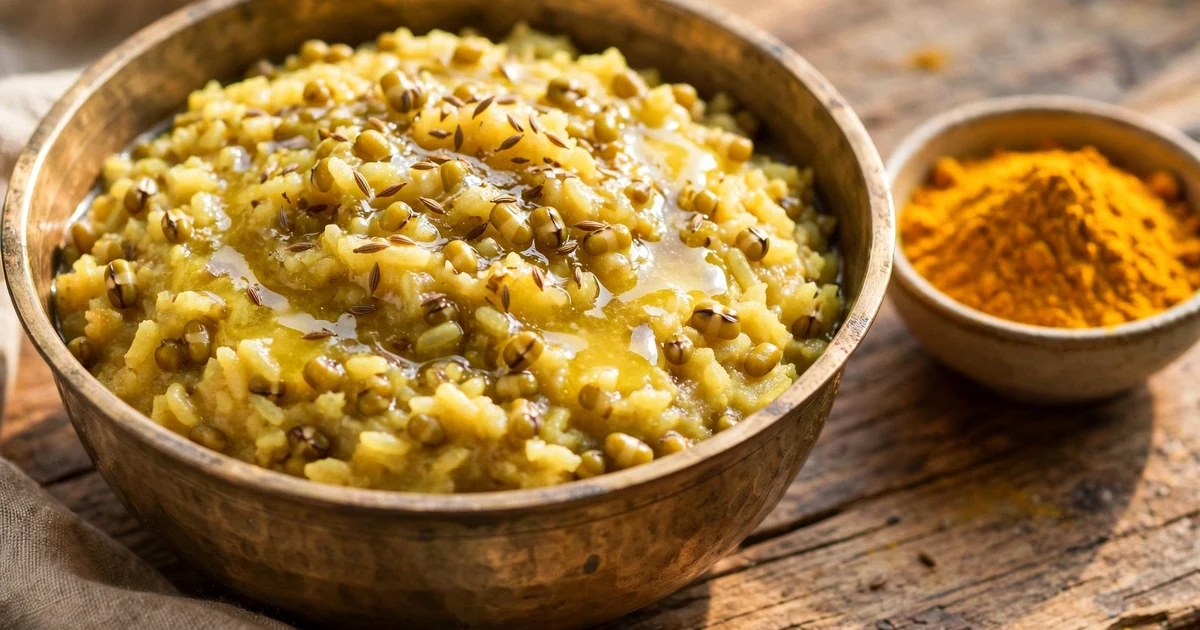
Khichdi is the ultimate Ayurvedic meal. It is tridoshic, meaning it suits Vata, Pitta, and Kapha types alike. It combines rice and mung dal in one pot, with ghee, cumin, turmeric, and a little ginger. The result is a complete, balanced meal that is warm, soft, and very easy on the stomach. Khichdi is also the food Ayurveda traditionally recommends when digestion is weak, because it gives the gut a rest while still providing energy. For dinner, keep it light: use more dal than rice and add plenty of water so it stays soft.
3. Cooked Leafy Greens
Spinach, fenugreek leaves, and curry leaves are excellent at dinner, but only when cooked. Ayurveda advises against raw salads in the evening, because raw vegetables are difficult to digest after sunset. Lightly saute spinach with garlic and cumin, or cook fenugreek leaves with a little ghee and tomato. Cooked greens give you iron, folate, and fibre without burdening digestion. A small bowl of cooked greens with dal or khichdi makes a complete, light dinner.
4. Steamed Root Vegetables
Beets, carrots, and sweet potatoes are grounding and warming, and steaming makes them easy to digest. They are especially helpful for Vata types, people who feel anxious, restless, or cold at night, because root vegetables have a steadying, warming quality. Steam them until soft, then toss with a little ghee, rock salt, and roasted cumin powder. A bowl of steamed root vegetables with a cup of dal soup is a satisfying dinner that still feels light.
5. Herbal Soups and Broths
A warm vegetable soup with cumin, coriander, ginger, and black pepper is one of the best ayurvedic dinner foods for a tired evening. Soup is hydrating, easy to digest, and calming for the nerves before sleep. Use seasonal vegetables such as bottle gourd, pumpkin, carrot, and tomato, cook them until soft, and finish with a tempering of ghee, cumin seeds, and black pepper. Drink it hot and eat it slowly. For people who come home late and hungry, a bowl of soup with a small piece of millet roti is often better than a heavy thali.
6. Organic Millets or Quinoa
Millets such as bajra and jowar are lighter than wheat or rice, and they are a good choice for people who want to lose or maintain weight. They help reduce Kapha, support metabolism, and are high in fibre, which keeps you full without feeling heavy. Cook millet as a soft porridge or make a thin roti and eat it with dal and cooked vegetables. Quinoa is a good alternative if millets are not available. Avoid eating millets as a dry, hard roti late at night, since dry food is harder to digest after sunset.
7. A Small Amount of Organic Ghee
Pure cow ghee in small quantities is an Ayurvedic staple. It coats the intestines, supports the absorption of fat-soluble vitamins, and is traditionally said to support deep, restful sleep. The key word is small: one teaspoon over khichdi or dal is enough. People with high cholesterol or heart conditions should ask their doctor how much is right for them. Used lightly, ghee adds flavour to simple ayurvedic dinner foods without making the meal heavy.
Dosha-Specific Ayurvedic Dinner Guide
Everyone has a different dosha balance, so the ideal ayurvedic dinner foods are slightly different for each person. If you are not sure of your dosha type, start with the tridoshic foods, mung dal, khichdi, and cooked vegetables, which suit almost everyone.
| Dosha Type | Best Dinner Foods | Foods to Limit |
|---|---|---|
| Vata (dry, nervous, light) | Hot soups, khichdi, root vegetables, ghee | Salads, cold foods, dry crackers, raw foods |
| Pitta (hot, intense, sharp) | Mung dal, cooked greens, coconut milk dishes | Spicy foods, tomatoes, red meat |
| Kapha (slow, heavy, oily) | Millets, light broths, steamed vegetables | Dairy, fried foods, heavy grains, sweets |
Vata types should favour warm, moist, and oily foods, Pitta types should favour cooling foods, and Kapha types benefit most from light, warm, and slightly spicy food. Seasonal changes matter too: eat lighter in summer and monsoon, and slightly richer food in winter. Regular fitness habits, such as a morning walk or gentle yoga, work well alongside an Ayurvedic dinner routine, and getting dinner right is a simple foundation for a healthy life.
Foods to Strictly Avoid at Dinner (Ayurveda Rules)
Ayurveda is very specific about what should not be eaten at night: these foods increase Kapha, disturb digestion, and can cause long-term problems when eaten regularly.
Curd and yogurt. Ayurveda strongly advises against eating curd at night. It is heavy, sour, and said to increase both Kapha and Pitta, which can lead to congestion and poor digestion. If you want a dairy option in the evening, buttermilk, or chaas, with a pinch of roasted cumin is a lighter alternative. Curd is best eaten at lunch, when digestion is strongest.
Fried and junk food. Samosas, pakoras, chips, and other fried snacks eaten late at night are hard to digest and quickly create Ama. They also disturb sleep, because the body stays busy digesting long after you lie down.
Frozen or reheated food. In Ayurvedic teaching, food that has been frozen or reheated many times is considered to have lost its prana, or life energy. Reheated food is often dry, stale, and harder to digest, so freshly cooked food, even a simple dal, is always the better dinner.
Red meat and heavy non-vegetarian food. Red meat, fried chicken, and other heavy non-veg dishes are very difficult to digest at night, when Agni is weak. If you eat non-veg, keep it light at dinner, such as a small portion of chicken or fish soup, and eat heavier non-veg meals at lunch instead.
Ice cream and cold desserts. Cold foods suppress Agni and prevent proper digestion. Ice cream after dinner is one of the worst combinations in Ayurvedic teaching, because it adds cold, heaviness, and sugar at exactly the time digestion is weakest. If you want something sweet after dinner, a few soaked raisins or a small piece of jaggery is a lighter option.
Excess salt after 7 PM. Salt retains water in the body and can raise blood pressure overnight. Dinner should be lightly salted, so avoid salty snacks, large quantities of pickles, and processed foods at night.
Refined sugar. White sugar adds empty calories and increases Kapha. Replace it with a small amount of raw honey if something sweet is desired, or end the meal with a stewed apple or a few dates.
7 Ayurvedic Dinner Rules for a Fit and Healthy Body
Following Ayurveda is not only about what you eat, but also how and when you eat. These seven rules matter as much as the ayurvedic dinner foods themselves.
1. Eat dinner before 7:00 PM. This gives your body two to three hours to digest before sleep. When dinner is finished by 7 PM, the stomach is mostly empty by bedtime and sleep is deeper. If 7 PM is impossible, aim for the earliest time you can manage and keep the meal very light.
2. Eat small portions. A traditional Ayurvedic guideline suggests eating only what fits in two cupped hands at dinner. Your stomach should never feel completely full or heavy after the evening meal. If you are still hungry after a light dinner, a cup of warm herbal tea is better than a second helping.
3. Eat only warm, cooked food. Raw and cold foods are too difficult to digest at night. Even a salad should be replaced by lightly cooked vegetables in the evening. Warm food kindles Agni and is easier for the body to break down.
4. Include digestive spices in every dinner. Cumin, fennel, coriander, cardamom, and turmeric are not just flavourings. In Ayurvedic practice, they help digestion, reduce gas, and keep the gut comfortable. A simple tempering of cumin and turmeric in ghee turns a plain dal into a digestive aid.
5. Do not drink cold water with food. Cold water is said to weaken Agni, so use warm water or herbal tea with your meal instead.
6. No TV while eating. Ayurvedic texts teach that mindful eating leads to better digestion. Eating while watching TV or scrolling on a phone means you chew less, eat faster, and eat more than you need. Sit down, eat slowly, and pay attention to the food.
7. Substitute sugar with honey. If you want sweetness after dinner, a small amount of honey in warm water or herbal tea is a better choice than refined sugar. Honey is traditionally described as light and warming, and it does not create the same heaviness as sugar. Use it in small amounts only.
Ayurvedic Herbs and Spices That Transform Your Dinner
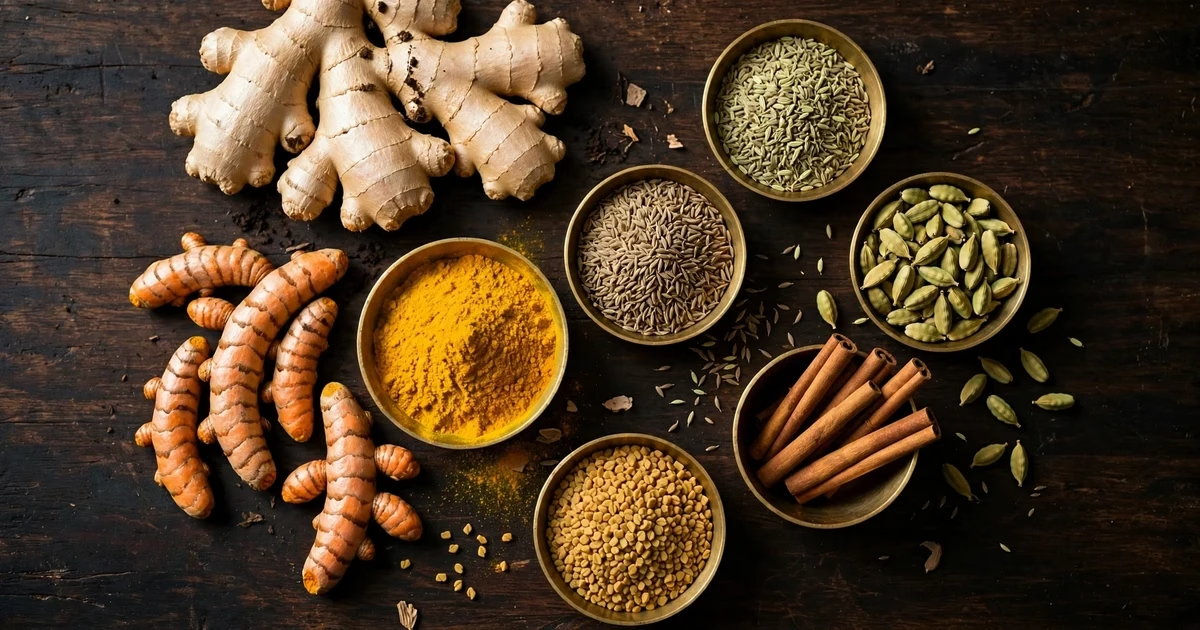
These herbs and spices are the quiet strength of ayurvedic dinner foods. Adding them to dinner is simple and cheap, and you probably have most of them in your kitchen already.
| Herb / Spice | Benefit at Dinner |
|---|---|
| Ginger | Boosts Agni, reduces bloating, clears toxins |
| Turmeric | Anti-inflammatory, purifies blood, supports liver |
| Cumin (Jeera) | Improves digestion, reduces gas and cramping |
| Fennel (Saunf) | Calms the stomach, reduces Kapha, freshens breath |
| Cardamom | Reduces mucus, supports respiratory health overnight |
| Cinnamon | Balances blood sugar, reduces Kapha accumulation |
| Fenugreek | Controls blood sugar, aids digestion |
Start with just three: ginger, cumin, and turmeric. Add fresh grated ginger to dal and soup, temper cumin seeds in ghee before adding vegetables, and add a pinch of turmeric to almost every cooked dish. Fennel is best after dinner: chew a teaspoon of roasted fennel seeds, or saunf, after the meal to settle the stomach. Cardamom and cinnamon work well in the bedtime drink described below. Poor sleep and constant stress are also linked to early greying, so if that is a concern, read about the causes of white hair and how a calm evening routine can help.
Well Health Organic Ayurveda Dinner: Sample Weekly Meal Plan
A meal plan makes ayurvedic dinner foods easy to follow. Use this week as a template, then repeat it with small changes, such as swapping one vegetable for another. Every dinner below is light, warm, and ready in under 30 minutes.
| Day | Dinner Option | Dosha Benefit |
|---|---|---|
| Monday | Mung dal soup + steamed spinach | Tridoshic |
| Tuesday | Khichdi with ghee + cumin | Tridoshic |
| Wednesday | Millet roti + fenugreek sabzi | Best for Kapha |
| Thursday | Lentil broth + roasted root vegetables | Best for Vata |
| Friday | Coconut milk curry + brown rice | Best for Pitta |
| Saturday | Light khichdi + ginger herbal tea | Tridoshic |
| Sunday | Quinoa bowl + cooked leafy greens | Tridoshic |
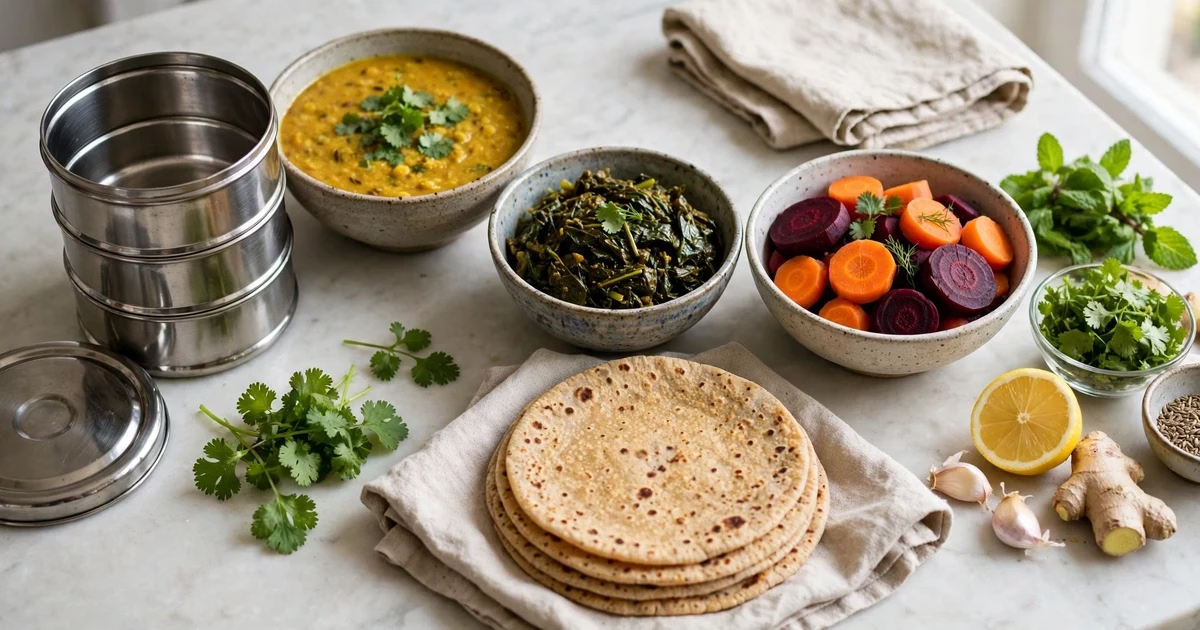
To follow the plan easily, cook a fresh pot of khichdi each evening, which takes about 20 minutes, and keep the spice box ready with cumin, turmeric, coriander, and ginger. If you feel hungry between lunch and dinner, a small cup of buttermilk or a handful of soaked almonds is a better snack than tea with biscuits.
Bedtime Drink Recommended by Ayurveda
If you drink warm milk before sleep, Ayurveda has specific instructions for doing it right:
- Always boil the milk first. Raw or cold milk is heavy and creates mucus.
- Add a pinch of cardamom or ginger before boiling. This reduces the mucus-producing quality of milk.
- Use low-fat or plant-based milk if you have a Kapha body type. Full-cream milk can feel too heavy at night for Kapha types.
- Add a small amount of turmeric for golden milk. Turmeric milk is traditionally valued for its anti-inflammatory benefits overnight.
This bedtime drink calms Vata, nourishes the tissues, known as Dhatu, and promotes deep sleep. A squeeze of lemon juice in warm water earlier in the evening can also help digestion, but do not add lemon to milk. Many Indian families use buffalo milk, which is rich and creamy; if you use it at night, boil it well and keep the portion small, since it is heavier than cow milk. People who cannot digest milk should choose a warm herbal tea instead, such as chamomile, tulsi, or fennel tea.
Final Thoughts
Ayurvedic dinner foods are not a diet plan with strict rules and expensive ingredients. They are a simple, practical way of eating: light, warm, cooked food, eaten early and mindfully, with spices that support digestion. The seven foods in this guide have been eaten in Indian homes for centuries, and they still work because they match how the body actually digests food at night.
Start with one change this week: eat dinner before 7 PM, or replace one heavy dinner with khichdi and soup, and notice how you sleep and feel in the morning. For more simple Indian wellness ideas, from beauty tips to skin care in Hindi and natural glowing skin tips, a light dinner is often the first step, because good digestion shows on the skin and in your energy. If digestive problems keep returning, do not ignore them: eat lighter for a few days and see a doctor if the problem continues.
Frequently Asked Questions (FAQs)
What is the best time to eat dinner according to Ayurveda?
The ideal dinner time is between 6:00 PM and 7:00 PM, which allows at least two to three hours for digestion before sleep. Eating after 8 PM regularly can lead to weight gain and the formation of Ama, or toxins, according to Ayurvedic teaching.
Can I eat curd at night in Ayurveda?
No. Ayurveda advises against eating curd at night. It is heavy and sour, increases Kapha dosha, and can produce excess mucus. Replace it with buttermilk, or chaas, with a pinch of roasted cumin if you need a dairy option in the evening.
Is khichdi good for dinner every day?
Yes. Khichdi is considered the most balanced dinner food in Ayurveda. It is tridoshic, easy to digest, rich in protein and carbohydrates, and can be eaten daily. Vary the vegetables and the dal, moong one day, masoor the next, so that the meal does not become boring.
What should I drink after dinner for better digestion?
Sip warm water infused with cumin, known as jeera water, or fennel tea after dinner. These are traditional Ayurvedic drinks for improving digestion and reducing gas. Avoid cold water, cold drinks, and tea with milk right after a meal.
Is Ayurveda suitable for weight loss?
Ayurvedic eating can support weight management because it focuses on light dinners, early meal timing, and foods that balance Kapha. Eating light ayurvedic dinner foods, avoiding Kapha-increasing foods at night, and following the 7 PM dinner rule are simple habits that help many people manage their weight over time, especially when combined with daily walking or yoga. Weight loss is never guaranteed, and people with medical conditions should consult a doctor.
What foods should be completely avoided at night in Ayurveda?
Avoid curd, fried foods, ice cream, red meat, refined sugar, frozen foods, and excess salt after 7 PM. These foods increase Kapha and suppress Agni, and they create toxins that accumulate overnight if eaten regularly.
How is Ayurveda different from a regular diet?
A regular diet usually focuses mainly on calories and nutrients. Ayurveda also considers the energetic quality of food, the time of eating, your dosha type, seasonal changes, and the relationship between food and mind. It looks at the whole pattern of eating and living, not just the numbers on a plate.

One thought on “Well Health Organic Ayurveda: Best Dinner Foods to Stay Fit in 2026”