

Millions of Indians, from IT professionals in Bengaluru to students in Delhi, sit for 8 to 12 hours every day, at office desks, at home, in classrooms, in traffic, and on sofas in the evening. Most of them do not realise that this quiet, everyday habit is slowly damaging their spine, heart, and metabolism.
This guide explains the health hazards of prolonged sitting simply, why sitting too long is dangerous even if you exercise in the morning, and what you can do about it with small, practical habits that fit Indian life.
Read this first: sitting itself is not a disease, and this article is for general information only. But numbness in the legs, chest pain, a swollen and painful leg, or back pain that does not improve in a few weeks all need a doctor, not just stretches.
Quick Facts: Prolonged Sitting at a Glance
| Factor | Detail |
|---|---|
| Average Indian office worker sits | 8 to 12 hours per day |
| Recommended sitting break | Every 30 minutes |
| Heart disease risk | Higher with excess sitting, especially with no movement breaks |
| Back pain among desk workers | Very common, and one of the top complaints in Indian offices |
| Calories burned sitting vs standing | Roughly 80 calories per hour sitting, compared with roughly 100 standing |
| Physical inactivity worldwide | Among the leading risk factors for early death and chronic disease |
Why Prolonged Sitting Is a Silent Health Killer
Most Indians do not realise how much damage sitting can do, because it does not hurt at first. You sit, you work, you feel fine. The damage builds slowly, day after day, month after month.
When you sit for hours without moving, your body slows down. Blood circulation drops, muscles switch off, and your body burns less energy. The leg muscles stop contracting, which slows blood flow and affects how your body handles sugar and fat. Over time, this pattern is linked to many chronic diseases, including heart disease, type 2 diabetes, and obesity.
The problem is especially severe in India because of the growth of the IT sector, call centres, online education, and work-from-home culture after COVID. Cities like Pune, Hyderabad, Chennai, and Bengaluru see the highest rates of sitting-related health complaints. Add long commutes in traffic, where people sit in cars, buses, and metros for hours, and the total sitting time becomes even longer.
Top Health Hazards of Prolonged Sitting
1. Back Pain and Spinal Damage
Sitting for long periods puts enormous pressure on your lower back and the discs between your spine bones. Poor posture, hunching over a laptop or mobile phone, makes it far worse.
- Weakens core muscles and the muscles that support the spine
- Can lead to slipped discs and sciatica over time
- Causes chronic lower back pain, one of the most common complaints among Indian desk workers
- Stiffens the hip flexors, the muscles at the front of the hips, creating postural imbalance
- Makes the neck and shoulders stiff from looking down at screens
Back pain from sitting usually starts as mild evening stiffness. The earlier you fix your posture and movement habits, the easier it is to reverse.
2. Cardiovascular Disease
Heart health is one of the biggest concerns with prolonged sitting. When you sit, your leg muscles stop contracting, which slows blood flow and allows fats to build up in the blood.
- Increases the risk of high blood pressure
- Lowers good cholesterol and raises bad cholesterol over time
- Raises the risk of deep vein thrombosis, a blood clot in the deep veins of the leg
- Is linked to a higher risk of heart disease, especially in people who sit for most of the day and rarely move
A short walk every half hour keeps blood moving and gives the heart regular, gentle exercise through the day.
3. Type 2 Diabetes and Insulin Resistance
India already has one of the highest numbers of people living with diabetes in the world, and sitting all day makes it worse. Physical inactivity affects how the body handles sugar, and it can lead to insulin resistance, even in young people in their 20s and 30s.
- Sitting after meals spikes blood sugar levels
- Reduces the activity of the proteins that move sugar from blood into muscles
- Increases the risk of metabolic syndrome, a cluster of conditions including high blood sugar, high blood pressure, and belly fat
- Makes weight gain more likely, which further raises diabetes risk
The most useful habit here is simple: walk for 10 minutes after lunch and dinner. It helps the body use the sugar from the meal instead of storing it.
4. Obesity and Weight Gain
One of the most visible health hazards of prolonged sitting is unexplained weight gain. Sitting burns very few calories while slowing your metabolism, the rate at which your body burns energy. Fat gathers around the abdomen, called visceral fat, and this type of fat is especially dangerous because it surrounds the organs.
- Excess belly fat is linked to fatty liver disease, which is very common in India
- Increases the risk of obesity-related conditions like PCOD and thyroid problems
- Leads to poor body composition even in people who eat healthy food, because the body is not using the energy it takes in
- Makes everyday movement harder, which leads to even more sitting, a cycle that is hard to break
Weight gain from sitting is slow, often just a kilo or two a year, so people rarely notice it until their clothes stop fitting.
5. Mental Health Problems
Many Indians overlook the mental toll of sitting all day. Physical inactivity is linked to low mood, anxiety, and poor concentration. Sitting for long hours reduces the brain chemicals that keep you happy and focused, and it leaves you feeling tired even though you have not moved.
- Increases feelings of fatigue, brain fog, and low motivation
- Worsens stress and burnout, especially in IT and BPO workers on night shifts
- Reduces creative thinking and problem-solving ability
- Breaks natural sleep patterns, because the body has not used up its energy during the day
Long-term stress shows on the body in many ways, from poor sleep to early greying of hair. A 10-minute walk in fresh air can clear the head better than another cup of chai at the desk.
6. Digestive and Gut Health Issues
Sitting right after meals or for long hours compresses your digestive organs. This slows down gut movement, the way food travels through your digestive tract, and contributes to several problems common in India.
- Constipation, bloating, and acid reflux
- Slower digestion and poor absorption of nutrients
- More gas and heaviness after heavy meals
- A higher risk of gut problems over years of a sedentary routine
If you have long-lasting diarrhoea, vomiting, or stomach pain, that is not just a sitting problem. Those are signs of stomach infections or other gut conditions, and they need a doctor. For everyday bloating and heaviness, simple home remedies like jeera water and a short walk after meals help most people.
7. Deep Vein Thrombosis (DVT) and Poor Circulation
Sitting cuts off proper blood circulation to the legs. This can cause blood clots to form in deep veins, a condition known as DVT. In severe cases, these clots can travel to the lungs and become life-threatening.
- Risk increases a lot during long train or flight journeys, when people sit without moving for hours
- Causes swollen ankles and varicose veins
- Cold feet and numbness are early warning signs
- People who have had a clot before, or who are pregnant, or who have recently had surgery, should be extra careful
On long journeys, stand up and walk every hour if you can, and flex your ankles and calves while seated. If one leg becomes swollen, red, and painful, do not wait. See a doctor the same day.
Health Risks by Sitting Duration
| Daily Sitting Hours | Health Risk Level | Common Symptoms |
|---|---|---|
| Less than 4 hours | Low | Minimal risk if active otherwise |
| 4 to 6 hours | Moderate | Mild back stiffness, fatigue |
| 6 to 8 hours | High | Back pain, weight gain, poor focus |
| 8 to 10 hours | Very High | Increased heart and diabetes risk |
| 10+ hours | Severe | Chronic disease, DVT, low mood |
The point is simple: the longer you sit without breaks, the higher the risk. Even cutting two hours of sitting a day makes a real difference.
Correct Desk Posture for Indian Office and Work-from-Home Setups
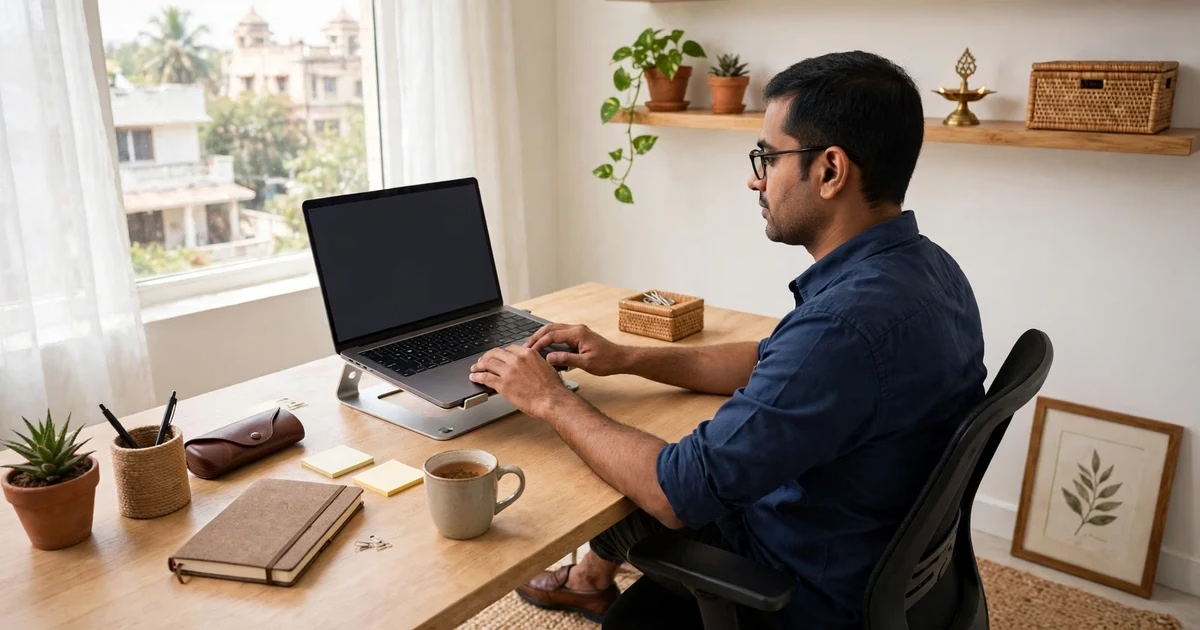
Good posture is not about sitting stiff and straight like a soldier. It is about giving your spine and muscles a neutral, supported position so they do not tire out over 8 hours.
- Chair height: your feet should rest flat on the floor, with knees at about a right angle. If your feet dangle, use a small footrest or a stack of books.
- Back support: your lower back should touch the chair back. A small cushion or a rolled towel behind your lower back helps a lot.
- Screen height: the top of your laptop or monitor should be at eye level. A laptop stand, or even a stack of books, fixes the common problem of looking down all day.
- Keyboard and mouse: elbows should rest at about a right angle, close to your body. Reaching forward for a mouse strains the shoulder.
- Phone use: do not hold the phone between your ear and shoulder. Use a headset or speaker on long calls.
Work from home brings its own problems. Many people work from the sofa or the bed, with the laptop on their lap and the neck bent forward for hours, which is one of the fastest ways to get neck pain and headaches. Even a simple table and chair, with the screen raised to eye level, is far better than a sofa. Set up one fixed work corner and keep it only for work.
For Indian offices, the chair is often the problem. If you cannot change it, a lumbar cushion and a footrest are cheap fixes that help immediately.
The 30-Minute Movement Rule
The single most useful rule for anyone who sits all day is this: never sit still for more than 30 minutes at a stretch. Every 30 minutes, stand up and move for at least 2 to 5 minutes.
- Stand up and stretch your arms overhead
- Walk to the pantry or the washroom, even if you do not need to
- Do 10 squats or 20 calf raises beside your desk
- Take phone calls while walking instead of sitting
- Use the stairs instead of the lift, at least for one or two floors
- Set a phone reminder every 30 minutes, because you will forget without one
Five minutes of movement every half hour adds up to about 80 minutes in an 8-hour workday. Most people find they work better after a short break, because focus returns.
Desk Stretches and Simple Exercises

You do not need a gym, a mat, or special clothes for these. Do them at your desk, in office clothes, between tasks.
| Exercise | Target Area | Duration |
|---|---|---|
| Hip flexor stretch | Hip and lower back | 30 seconds each side |
| Cat-cow pose (Marjaryasana) | Spine and core | 10 reps |
| Wall squats | Legs and glutes | 3 sets of 15 |
| Neck rolls | Cervical spine | 5 reps each direction |
| Seated twist (Ardha Matsyendrasana) | Spine and digestion | 30 seconds each side |
| Calf raises at desk | Circulation in legs | 20 reps, 3 times a day |
| Shoulder shrugs and rolls | Neck and shoulders | 10 reps |
| Seated knee lifts | Hip flexors and core | 10 reps each leg |
Do 2 or 3 of these in each 30-minute break. The hip flexor stretch matters most for sitters, because sitting shortens the hip muscles, which then pull on the lower back. If one stretch hurts sharply, stop.
For people who want more, regular exercise outside work hours is the foundation. A brisk 30-minute walk, five days a week, is enough for most people. Adding strength exercises twice a week, like squats, push-ups, and rows, protects the back and keeps muscles strong as you age.
Walking After Meals and Daily Movement

Walking after meals is one of the oldest Indian health habits, and it is also one of the best. A slow 10-minute walk after lunch and dinner helps digestion, keeps blood sugar steadier, and breaks up the longest sitting block of the day.
- Walk for 10 minutes after lunch and dinner, even inside the house or on the terrace
- Take the stairs instead of the lift whenever you can
- Get off the bus or metro one stop early and walk the rest
- Park a little further away, or walk to the nearby shop instead of taking the bike
- Do household work yourself, sweeping, mopping, and cooking all count as movement
- Walk while talking on the phone, a habit many Indians already have
Daily movement does not have to look like exercise. The goal is to sit less and move more, in small pieces through the whole day.
India-Friendly Diet Tips
What you eat matters a lot when you sit all day. Heavy food plus long sitting is a bad combination for digestion, weight, and energy.
- Eat smaller, more frequent meals to prevent blood sugar spikes
- Add more fibre through dal, sabzi, and whole grains to aid digestion
- Drink jeera water or ajwain water to reduce bloating
- Avoid heavy lunches before long sitting hours, and switch to lighter tiffin options like khichdi, dal, and salad
- Stay well hydrated, because dehydration worsens fatigue and joint stiffness
- Start the morning with lemon water instead of a heavy, sugary drink
If you drink milk, buffalo milk is richer in fat than cow milk, so a smaller portion is enough. For sweetness, a small amount of jaggery is better than refined sugar, but it is still sugar, so keep the portion small. Keep dinner light and early. A simple Ayurvedic dinner of khichdi, soup, or steamed vegetables helps digestion and sleep.
Sleep and Sitting
Sitting and sleep are connected in both directions. People who sit all day often sleep badly, and people who sleep badly feel too tired to move the next day.
Long screen hours late at night keep the brain alert when it should be winding down. Many Indians sit on the sofa after dinner, scrolling on the phone until midnight, then wonder why they wake up tired. The body has not moved all day, so it has not built up the healthy tiredness that comes from physical activity.
- Move during the day, so the body is genuinely tired by night
- Stop heavy screen use at least 30 minutes before bed
- Keep a fixed sleep time, even on weekends, because the body likes routine
- Avoid heavy, oily food late at night, because it disturbs sleep and digestion
- A short walk after dinner helps both digestion and sleep
Good sleep also shows on your face. Tired, dull skin is often just poor sleep and too little water. Simple skin care starts with sleep, water, and food, and our beauty tips guide explains the same habits in more detail. Adults need 7 to 8 hours of sleep. Less than that, day after day, raises the risk of weight gain, high blood pressure, and low mood.
When to See a Doctor
Most sitting-related aches improve with movement and good posture in a few weeks. But some signs need a doctor, and waiting can make them worse.
- Chest pain, or pain spreading to the arm or jaw, especially with sweating or breathlessness, needs emergency care
- Numbness, tingling, or weakness in the legs that does not go away
- One leg that is swollen, red, and painful, which can be a blood clot
- Back pain that does not improve after a few weeks of movement and good posture
- Back pain after a fall or injury, or pain with fever or unexplained weight loss
- Loss of bladder or bowel control, which needs urgent medical care
When you see a doctor, tell them how many hours you sit each day, what your work setup looks like, and when the pain started. That information helps them tell the difference between simple muscle strain and something that needs tests or treatment.
The Active Couch Potato: Why Morning Exercise Alone Is Not Enough
Many Indians exercise in the morning, then sit for 10 hours at work, and assume they are safe. They are not. This is called the active couch potato pattern, and it is very common in India.
One hour of exercise does not cancel out 10 hours of sitting. The body responds to what you do most of the day, not to one hour of it.
The fix is not to exercise more in the morning. The fix is to move through the day: the 30-minute rule, walking after meals, stairs instead of lifts, and standing during calls. Think of it this way: the morning walk is the foundation, and movement through the day is the building. You need both. A healthy life is built from small habits repeated every day, not from one big effort once in a while.
Conclusion
The health hazards of prolonged sitting are real, but they are also among the easiest risks to reduce. You do not need to quit your job or buy expensive equipment. You have to move more, in small pieces, every day.
Start with three habits: move every 30 minutes, walk for 10 minutes after lunch and dinner, and fix your chair and screen height. Do those for two weeks, and most people notice less stiffness, better energy, and better sleep.
India’s healthcare burden is already heavy. Prevention is the only realistic solution, and it starts with the simplest step of all: get up, stretch, and walk. Your body will thank you years later.
Frequently Asked Questions (FAQs)
What are the main health hazards of prolonged sitting?
The main health hazards of prolonged sitting include back pain, heart disease, type 2 diabetes, obesity, low mood, digestive problems, and blood clots in the legs. Even 6 to 8 hours of daily sitting puts you at serious risk if you rarely move.
How many hours of sitting per day is too much?
Sitting for more than 6 hours a day is considered high risk. The key is not just the total hours, but how long you sit without a break. Break sitting time every 30 minutes with movement, whatever your total hours.
Can sitting too long cause death?
Prolonged sitting is linked to a higher risk of early death, including deaths from heart disease, stroke, and cancer. Sitting 10 or more hours daily can shorten lifespan even in physically active people, which is why movement through the day matters as much as exercise.
Is standing all day better than sitting?
Not entirely. Standing all day causes its own problems like varicose veins and knee pain. The best approach is to alternate between sitting, standing, and moving throughout the day.
What are easy desk exercises for Indian office workers?
The most practical exercises include neck rolls, seated spinal twists, calf raises, shoulder shrugs, and hip flexor stretches. Even a 5-minute walk to the pantry counts as beneficial movement.
Does sitting after eating cause weight gain?
Yes. Sitting immediately after eating slows digestion and sugar metabolism, leading to higher blood sugar spikes and increased fat storage. A 10-minute walk after meals helps a lot.
How can I set up a healthy work-from-home desk?
Use a table and chair, not the sofa or bed. Raise the screen to eye level with a laptop stand or books, support your lower back with a small cushion, and keep your feet flat on the floor. Take a movement break every 30 minutes.
When should I see a doctor about sitting-related pain?
See a doctor if you have chest pain, numbness or weakness in the legs, a swollen and painful leg, or back pain that does not improve after a few weeks of movement and good posture. Sudden severe pain, or pain with fever or weight loss, needs medical attention without delay.
Disclaimer: This article is for general information only and is not medical advice. It does not replace a doctor’s advice, diagnosis or treatment. If you have chest pain, numbness or weakness in your legs, a swollen and painful leg, or back pain that does not improve, please see a doctor urgently. Stop any exercise that causes sharp pain, and follow the advice of a doctor or physiotherapist for your own condition.